

Types of Irrigation Systems for Residential Yards
In the past, homeowners overlooked the essence of a well-maintained yard. They focused only on their interiors. Nowadays, people realize that guests base their perception of their homes on their exteriors. Moreover, most entertainment in homes now happens outdoors because of dwindling indoor spaces. As such, getting and maintaining the best-looking front and backyard is essential.
Besides picking the right plants, you need a yard maintenance Santa Rosa company to institute the right irrigation system to keep your plants thriving. Some homeowners assume that any irrigation system will do. Others believe that hand watering can work though this is often a hassle, more so for busy people and those with large outdoor spaces.
Without a sound irrigation system, your plants will die and leave your outdoors looking drab. Below are the irrigation system options you have for your outdoors.

Drip Irrigation
When you have different plants to care for in your yard, it is best to use a drip irrigation system. This allows the fine-tuning of the amount of water that your plants get. In a drip irrigation system, porous hoses are laid throughout your yard to deliver water directly to the roots of your plants. Since plants shade the hoses, there is little water lost through evaporation, even in hot weather.
Some drip irrigation systems have in-built timers attached to special emitters to allow plants that need more water to get it at specified times. This minimizes the hassle of watering plants because all you do is set the timer to ensure your plants get enough moisture. Though it guarantees efficient water use and reduces weed growth, drip irrigation works best for small yards.
There is a variant of the drip irrigation system known as the rain catchment drip irrigation system. It is integrated with rain barrels that collect water before distributing it to your plants through porous hoses. This option works through simple gravity that pushes water through pipes down a slope.
Subsurface Irrigation
This is similar to the drip irrigation system because it distributes water through tubes and emitters. However, unlike in the latter, the pipes in a subsurface irrigation system are underground. This minimizes losses from evaporation and allows water to be pushed under low pressures, thus allowing the use of smaller pumps. Furthermore, a subsurface irrigation system allows direct delivery of water to plant roots without hideous pipes running across your yard.
Sprinkler Irrigation
In a sprinkler irrigation system, water will be supplied to your yard overhead like a downpour rather than directly to the roots of a plant. Though there are several types of sprinkler irrigation systems available, they all work the same way. They are the most versatile alternatives for large yards with the same plants because they spread water over a large space.
Sprinkler irrigation systems do not rely on gravity like other options. Therefore, they can be used on almost all land topographies. Moreover, the systems are easier to maintain and work exceptionally well for plants that need regular watering.
In hot months, it is best to use sprinklers in the evenings and early mornings. Irrigating your yard in the middle of the day will only lead to the evaporation of the water and less water reaching your plant’s roots. Sometimes, a yard maintenance Santa Rosa agency can recommend setting up timers for your irrigation system to ease their use and efficacy.
Bubbler Irrigation System
Bubbler irrigation systems are a cross between drip and sprinkler systems. They deliver a lot of water to plants, but only from about six inches above the ground. You can include timers on them and focus on their emitters so that only specific plants are watered at different times. Bubbler irrigation systems are ideal for yards with many identical plants in the same small location. They also work for raised plant beds, small trees, and shrubs.
Though bubbler irrigation systems are highly efficient and save about 75% water, they have high initial costs. Moreover, in very sandy soils, the high filtration rates make it challenging to get uniform water distribution in a place.
When considering which of the above irrigation systems works best for your yard, you should consider your plants and your land’s gradient. For example, bubbler irrigation systems work for gardens with homogenous species or large plants. On the other hand, drip irrigation systems work best for yards with different plants with varying needs.
You can also use multiple types of irrigation systems for your yard to maximize the benefits of watering your land. With the easy access to information online nowadays, you might assume that a yard maintenance Santa Rosa specialist is an unnecessary expense in your household budget. However, without a specialist to guide your choice of an irrigation system that best works for your landscape, getting a perfect yard will be challenging and sometimes impossible. Contact us for more information.
8 Essential Lawn Treatments for a Healthy Lawn
A healthy and vibrant lawn does not just happen. It takes a lot of care and treating it the right way. You can get a lush yard by using the best lawn treatment practices. Time your treatment procedures correctly to avoid damaging the turf by exposing it to weed, pests, and weather damages.
Although each lawn is unique, there are common lawn care practices for people wanting an evergreen, lush lawn. Here are 8 essential treatments for a healthy lawn.

Plant Types
Find out the best plants to grow in your location. You can grow warm-season or cool-season plants- depending on your climate. The climate and plants you grow will determine the herbicides and pesticides to use. Consult with your lawn treatment specialist to help you select the ideal plants for your yard.
Mowing
The best time to mow your lawn is early in the morning or late evening when the temperatures are low. This protects your grass from going into shock.
When cutting your grass, adjust your blades to help you trim the top third of the lawn grass. This is called the one-third rule of mowing. Avoid mowing wet grass as it clogs the mower blades, causing them to transmit diseases across your yard.
Weed Control
Prevent weeds from growing in your yard to get a healthy lawn. Proactive weed control helps you stop pre-emergent weeds. Do this continually to avoid the weds from resurfacing in the next season.
You can achieve this by using targeted weed control, where your lawn treatment expert tests the soil to find out the predominant weeds and their growing seasons. This helps you use pre-emergent weed control measures to eliminate all weeds in your lawn.
Avoid toxic herbicides that may harm your grass, pets, and the environment. Study the labels on herbicides and follow the instructions, or let a lawn expert apply them for you to avoid undesirable results.
Watering
The amount of water and frequency of watering depends on the climate. If you receive enough rain, your lawn will grow well with minimal watering. Look out for signs of water shock to know when your yard needs watering.
The best test for water shock on a lawn is walking on it and observing if your footprints remain visible. If they do not, the grass has sufficient water.
Water your lawn deeply and infrequently to ensure it has enough water to support the grass to grow healthy. The yard should drain well so that the grass is watered uniformly without any parts forming water puddles that can damage your turf.
Aeration
Harsh weather conditions and heavy foot traffic may cause compacted soil ad dense thatch to form on your lawn. This blocks pathways for water, nutrients, and water, leaving the yard looking unmaintained.
If your pets spend all the time on your lawn, they may ruin it if they do not have specific urination spots. Assess the yard to note the damages you need to correct during aeration.
Aeration reduces soil compaction, water run-off, and thatch build-up. As professionals aerate your lawn, they will test the soil to determine nutrients deficiency to advise you on the best fertilizers for your turf.
Overseeding
After aeration, you should spread grass seeds over your turf to encourage new growth to replace damaged grass. This improves the overall appearance and health of your lawn. It also ensures there are no bare spots on the turf.
A thick turf leaves no room for weeds to grow. It is also easier to control pests on a thick turf since they don’t have spaces to hide in.
Fertilization
The right kind of fertilizer and accurate application timing is essential for a healthy, vibrant lawn. Ensure the fertilizer is appropriate for the issues your yard is experiencing, such as bare spots, dry conditions, or nutrients depletion. Read the labels on your fertilizers to know the amount you need for your lawn and the right season to apply it.
Pest Control
Pests on your lawn are dangerous to people and plants. Assess your yard to know the existing pests to control them effectively. Some common pests include fire ants and grubs that cause extensive damage to lawns when they burrow the soil and feed on plant roots.
Some pesticides are harmful to humans and pets. Examine the labels on the containers to know how to handle them. You may also apply them when you expect minimal activities in the yard, such as overnight or when away. You can also use organic pesticides to minimize their effects on the environment.
Soil Amendment
Most lawns grow well if the soil has a pH level of 5.5 to 6.5. Too much acidity damages roots, preventing them from absorbing nutrients.
Soil amendment helps you balance the pH level to suit the type of grass on your lawn. Call a lawn treatment expert to test the soil and advice you on the best way to balance the soil pH level.
Tips To Keep Your Bushes Looking Their Best All Year
We can all agree that bushes are an essential part of any lawn. They make a great attraction and addition to places like walkways and fountains. You can also use them as the background of your lawn’s garden beds.
But for these small to medium-sized woody plants to keep looking their best all year, you need to take great care of them. The goal here is to ensure they add structure, texture and beauty to your landscape.
If you already have bushes or plan to plant them in your loan, there’s something here for you. We’ll cover the maintenance tips needed to keep the woody plants strong and healthy.

- Plant the Bushes at the Right Time
The lawn plants you choose to plant must be adaptable to your area’s climatic conditions and soil. Check the package for instructions and labels on the right growing conditions.
Fall is the best time to introduce new plants to your lawn. This allows the plant to get more time to adjust and grow before winter arrives. Also, during fall, the plant’s root system can easily establish before spring.
- Set a Watering Schedule
Your lawn plants will definitely need water to thrive and survive. You should therefore schedule watering at least once a week and do it thoroughly.
If watering the plants with a sprinkler, set the timer at least 10 minutes. Stop watering when the soil absorbs the water completely or when the lawn is soaked in water.
Water your new plants at planting time and intervals of 1 to 2 weeks daily after planting. You should also water them every 2 to 3 days once 3 to 12 weeks pass after planting. The plants will have more established roots after 12 weeks.
- Stick to Proper Feeding Habits
Instead of feeding your newly-planted bushes with fertilizers, mulch the soil with adequate compost. Mulching helps enrich the soil with essential micronutrients.
Later on, you can add fertilizers based on the nutrition requirements of the plants. For fragile plants, a layer of compost can help amplify the soil nutrients.
The most commonly used nutrients for the plants are potassium, phosphorus and nitrogen. Other essential nutrients include fairly large quantities of sulfur, magnesium and calcium.
- Prune at the Right Times
Pruning can only help maintain the shape and size of the plants if done regularly. You also need to employ different pruning tools for the task.
The best time for pruning the plants has to be spring. However, you have to figure out when the plant blooms. If its blooming season is spring, prune it when flowering stops.
And if it blooms in summer, consider trimming it in early spring or late winter before new growth forms. Either way, light summer pruning will work with a deciduous plant, while heavier pruning (in late winter) will be ideal for a dormant plant.
- Tie or Stalk the branches
Stalking the new bushes will work if they appear weak and it becomes difficult to straighten them. Give the plants some support until they develop a strong trunk. While doing this, ensure that the stalk has the same height as the plant.
You can also tie the stalk to the branches using heavy wrapped wire. But the cable needs to be shielded with a hose to protect the plant’s bark from grinding.
- Test the Soil
Soil testing will help you find out if the land has any deficiencies. If the test results suggest that there are deficiencies, address them using appropriate fertilizer. For instance, slow-release fertilizers will help you overcome nitrogen deficiency.
You can have your soil tested expertly if you send a sample to a soil lab in your area. Locally purchased soil test kits can also help you do this task.
- Watch out for Pests
Pests are undeniably a cause of concern in the maintenance of lawn plants. A lawn care professional can advise you on a suitable method to counter pest infestation on your lawn.
Examples of the most damaging lawn pests include Japanese beetles, masked chafers and white grubs. Others include caterpillars, mites and aphids.
- Mulching the Soil to Retain Moisture
Mulching is a great way to retain the warmth and moisture of the soil. The mulch can help your bushes take water from the soil during winter. It can be in the form of tree bark and wood chips if you lean more on the organic side and plastic paper for the inorganic options.
You can apply the mulches to the soil surface around your plants. This helps reduce soil erosion and control weeds. It also helps maximize the growth of your new bushes while cutting fertilizer costs.
The Takeaway
Implementing proper bush maintenance and gardening is the best way to keep your bushes and lawn looking healthy all year round. Good luck trying out these practices on your lawn.
And if you need professional lawn and landscaping help, we are always here to help you. Reach out today for a free estimate.
A Guide to Lawn and Landscape Maintenance
In theory, landscape maintenance shouldn’t be so hard, right? Just trim, water, and fertilizer. In actuality, landscape maintenance comes with a host of problems. Maybe your grass is dying in patches, or weeds have taken over your lawn.
Achieving a beautiful lawn and garden takes time, patience, and the right information. From pruning to fertilization and pest control, here’s everything you need to know about proper landscape maintenance.

Landscape Maintenance Tips and Tricks
1. A healthy lawn starts with healthy soil
For a healthy lawn, your soil should ideally be loam soil – a balance of sand, silt, and clay. Such a composition is great at retaining both moisture and nutrients. It allows for proper aeration, creating the perfect foundation for plant growth.
Nutrient-stressed soils are breeding grounds for weeds. Naturally, healthy soil has a highly diverse array of microscopic life. It’s this blend of living organisms that helps create ideal growing conditions and strengthen your lawn against disease and pests. Your grass will have deeper, healthier roots and will naturally thrive in all seasons.
So, how can you make your lawn soil healthy?
- Feed your soil with organic matter such as shredded leaves, humus, peat moss, and home composting organic matter
- Protect your soil with organic mulching, as this will lessen weed growth and germination and help retain soil moisture
- Remove weeds as they steal nutrients from your grass
You might also consider getting your soil tested. Just because your dirt looks rich doesn’t mean it’s the right pH for grass and plant growth, as most grasses prefer a pH of 6.0 to 7.2. Fortunately, you can easily fix soil PH by adding lime to raise it or iron to lower it.
2. Tread and till with care
Soil compaction occurs with too much foot traffic. Treat your garden soil with extra care by walking on paths and not parking or riding heavy vehicles on the lawn – especially when the soil is wet and compacted. Soil compaction increases soil density preventing plant roots from penetrating the soil properly. As such, your plants or grass will be unable to exploit the soil for nutrients and moisture.
If your lawn soil is hard to the touch or your grass looks stressed, you might have compaction problems. Aerate your lawn at least once a year to improve the flow of oxygen and nutrients. You can hire a landscape maintenance service to aerate your lawn for you or invest in aerators and do it yourself like a pro.
3. Re-assess your mowing technique
The number one cause of a lackluster lawn is mowing too short, so it’s important to keep your lawn at the right height throughout the year. You never want to cut more than 1/3 of the existing grass blade as you could burn the roots. Doing so also reduces water retention, which means you’ll have to water your yard more often.
On that note, it’s important to grow the grass variety that’s best adapted to the local environment. You’ll find that such grass requires less maintenance to look good.
4. Water properly
Now, this doesn’t mean you should water your lawn more – you just need to change the way you water. Aim to water deeply instead.
Water conservation and a healthy, luscious lawn aren’t necessarily mutually exclusive. Most lawn grasses need the equivalent of 1 inch of rainfall to retain a healthy and attractive appearance. If it doesn’t often rain in your area, supplemental irrigation is an absolute must. There’s no hard-and-fast definition for watering deeply. It just means watering in a way that soaks the soil, as most plant roots aren’t sitting close to the surface.
Consider investing in a drip irrigation system as it will water your grass slowly, thereby limiting evaporation concerns.
5. Mulch for your flowerbeds
Mulching is important for a few reasons:
- It insulates the soil, providing a buffer from heat and cold temperatures
- It helps retain soil moisture
- It prevents soil compaction
- It prevents weeds from popping up in your flower beds
- It helps control soil erosion, enabling you to retain the healthy layer of fertile soil
6. Address aggressive weeds early
It’s best to deal with weeds in early spring just as they’re popping up. The longer you allow them to grow, the more deep-rooted they’ll become. You may opt for an organic herbicide, but the best way to minimize weed is through good cultural practices.
- Maintain the health of your soil
- Leave mow clippings on the grass for nutrients and protection
- Devote parts of your lawn to wildflowers
- Do not mow your grass too short
Work with a Landscape Business You Can Trust
We’ve been creating and maintaining beautiful landscapes for years. Contact us for more tips and tricks on keeping your landscaping manageable and low maintenance.
7 Lawn Treatment Tips for the Best Looking Lawn on the Block
Your lawn needs just as much love as any garden. A good lawn brings all the elements of your yard together, creating a perfect space for fun and relaxation. It also works wonders for curb appeal.
Lawn care is a bit more involving than most people realize. It involves trimming, mowing, watering, weed removal, fertilizing, soil health, and more. A thorough lawn care program involves services like pest control and soil testing to ensure your turf is healthy and disease-free. And this is in addition to your lawn maintenance responsibilities like removing debris, edging borders, and mowing grass.
Keeping your lawn healthy and luscious can be overwhelming. So, here are some lawn treatment tips to make the process less tasking so you can achieve a thick, lush green lawn.

1. Establish a Lawn Care Calendar
Mowing is one of the most important processes for maintaining a healthy lawn. Ideally, you should cut your lawn at least once a week during the summer months and once every two weeks during the rest of the year.
If you’ve already established a great-looking lawn, then your priority will be maintaining the health of the grass year-round. If not, autumn is the perfect time of year to start again with your lawn treatment – as temperatures are still warm enough to sustain growth.
2. Get to Know Your Soil
The fastest way to a beautiful, healthy lawn starts with healthy living soil. And nothing contributes to the health of your soil more than a thick, rich organic lawn. It’s a symbiotic relationship.
Although the way a lawn looks is a good indicator of the overall health of the soil, the only way to know for sure what lawn treatments it needs is to do a soil test. Taking a soil sample to your local agriculture extension office helps you understand which fertilizer you should use and whether nitrogen, phosphorus, and potassium levels are sufficient.
Everything else is mere guesswork and could lead to over-fertilizing your lawn, which could kill your grass in the worst-case scenario.
3. Use Natural Lawn Fertilizers
Nitrogen is what gives your lawn that lush green color. Lawns should be fed with fertilizer at most twice a year – in spring and autumn. Natural lawn fertilizers are made from organic matter and can improve the health of your lawn without introducing potentially harmful substances into the soil and water.
Depending on the health of your soil, spring feed should be high in nitrogen to facilitate growth, whereas autumn feed should be high in phosphorous and potassium to toughen the grass for harsh winter weather.
4. “Grass-Cycle” Your Grass Clippings
Grasscycling is simply the process of leaving leftover grass clipping on your yard after mowing. As the clippings break down, they improve the health of your soil as they contain moisture and valuable nutrients. What’s more, grass clippings decompose fairly quickly, providing your lawn with a ready source of nutrients.
Not only does grasscycling improve the texture of your lawn by helping the soil retain more water, but it’s also an environmentally friendly option.
5. Aerate Your Lawn
Aerating, or spiking, involves perforating the soil with small holes to allow air, water, and nutrients to penetrate the grass roots. It relieves soil compaction and enhances growth. Aerate your lawn in the spring and the autumn for best results and when your lawn gets compacted.
On that note, make a point of regularly removing weeds, thatch, and moss as they can prevent growth by blocking air and nutrients from getting to the roots.
6. Pre-Emergent and Targeted Weed Control
Weed control helps improve your lawn’s natural defenses and reduce future maintenance chores. Finding the right weed treatment plan requires you to understand:
- The different types of weeds
- Their growing seasons
- And how to treat them based on these conditions
Weeds are a problem you need to deal with sooner rather than later. Do so by using weeding tools to get rid of deep-rooted dandelions or get a weed killer if your yard is run over with weeds. You can even use a pre-emergent herbicide to stop weeds from germinating.
7. Watering
A lawn needs enough water for it to grow bright green– that much is clear. What’s less clear is how much and how often you should water your lawn. Too little water and your lawn will shrivel up and die; too much and it’ll become over-saturated and die.
The best method for lawn watering is to water deeply and infrequently unless you’re going through a dry spell. If the weather is especially dry, then it’s best to have a consistent irrigation schedule.
Maintain the Perfect Lawn with a Professional Landscaper
Lawn care involves a combination of simple daily and weekly tasks that you can do yourself. You can also get a little bit of help from a landscaping professional, particularly if you’re dealing with bare patches, pests, or weeds.
Get in touch to see how we can help you get the perfect lawn.
3 Simple Flower Bed Ideas to Reduce Maintenance Costs
Adding a flower bed to your front or back yard is a smart and quick way to add color and liven things up. However, flower beds require a lot of maintenance and upkeep after the garden is installed. Here are a few tips to add some personality to your lawn and reduce the maintenance costs.
- Design the Perfect Shape for your Flower Bed

Beauty is in the eye of the beholder. Once you’ve decided on where to plant your new flower bed, the next step is to figure out what shape you’d like to have. There are tons of forms you can choose from. However, a bed with sharp angles can be challenging to cut and maintain because it’ll be hard to cut with a lawnmower. Granted, you can tackle those angles with a weed whacker, but that will be additional work on your end. Avoid extra work by designing and constructing flower bed ideas that have gradual and smooth curves.
- Install Weed Prevention Measures
The most common weed prevention method is landscape fabric. The fabric restricts weeds from growing through. However, weed roots can grow down through the material if the weed seeds germinate above the landscape fabric layer. Adding an extra layer of mulch will provide a strong defense against weeds and keep your flower beds healthy. A practical flower bed idea is laying down the fabric before planting and making X pattern slits where you want to plant your flowers. This simple method will keep the weeds at bay.
- Select the Overall Theme
There are two types of flower bed ideas, namely:
Formal flower beds – Here, the flowers are usually limited to a few different types. These beds typically have more geometric shapes and straight lines. They often include shrubs and yews that are planted in straight lines to form a border and create designs.
Informal flower beds – Here, you’ll find many different sizes, textures, and colors of flowers. These flower beds have some structure to the design, but the lines and borders are not as defined. The plants and flowers are left to grow as they wish with a little pruning here and there to promote new growth and maintain their size.
Flower beds are mostly used as beautiful masterpieces on the lawns of many homes. However, maintaining a flower bed can be time consuming and exhausting. Contact lawn and bed experts to receive a comprehensive range of lawn care and landscaping needs tailor-made for your flower bed ideas.
Xeriscape Landscaping Ideas
Xeriscape landscape design is a garden-style that is not only environmentally friendly but also attractive. Yards that can handle xeriscape landscaping ideas feature all types of plants and garden styles. Xeriscape principles make the most of natural-occurring water.
Top Xeriscape Design Ideas

There are a few reasons homeowners develop an interest in xeriscape designs. The most common include:
- It saves money on water
- It is more eco-friendly
- It requires little maintenance
These perspectives have an impact on the decisions made during the design process. For instance, if you are approaching xeriscaping from an environment-conscious angle, you want to select native plants. For a rental home, choose low-water plants. Here are things to consider in your xeriscape landscaping ideas.
Watch Out for Problem Areas
Survey your landscape and take note of areas that appear to be problematic in terms of difficulty to water and maintain. Pay attention, especially to steep slopes, narrow strips, and corners of your lawn, drought-prone, and rocky areas. For the stubborn areas, drip irrigation may be your best choice because it applies water slowly over more extended periods to minimize the possibility of a runoff.
Choose the Right Plants
A good design for xeriscape accommodates both drought-tolerant and native plants. These should be planted according to their watering needs. Grouping plants allows you to water what needs to be watered. Soaker hoses are an ideal watering choice because they allow water to soak into the ground instead of running off.
Transform your Landscape
Begin by improving the soil. Clay soil binds together after it rains because it has small particles. This enables the soil to form a tight bond to prevent moisture from absorbing into the ground. Ensure that your soil is rich in organic matter that acts as a sponge to hold water and release moisture.
The other idea would be to use mulch. A thick layer of mulch helps in maintaining a consistent amount of soil moisture. Pine needles, grass clippings, compost, and leaves, are some of the organic mulches to use. These minimize evaporation. Some gardeners also prefer stone and gravel, but these do not decompose and can make it challenging to move plants around.
Many xeriscape landscaping ideas can be embraced without limiting you to specific types of plants. These types of gardens can be designed in many styles. You only need to select the style that suits your landscape. If you choose the right plants and exercise xeriscape principles, you will achieve a thriving and head-turning garden. We specialize in maintenance, repair, irrigation, and water-saving landscape designs. If you are looking for a professional landscaping company, please contact us today.
What Homeowners Need to Know About Hardscaping
In every home, the landscape is usually the focal point. A good landscape incorporates both greeneries and elements that add structure and functionality to a home. Gone are days when softscape was the main focus in landscaping. In fact, according to the National Association of Realtors (NAR) report, investing in outdoor hardscape projects adds resale value to a home and fulfills the homeowners.
While a well-finished hardscape sets a home apart, it is a critical landscaping aspect that most homeowners overlook. To most people, hardscape is a luxury item hence the reluctance to commit to it. But a little hardscape can go a long way. As you plan to create the ideal landscape for your home, sufficient knowledge of complex elements can help you utilize your outdoor space effectively while striking a balance between landscape elements. Here is an in-depth look at the hardscape.

What is Hardscape?
Experts in landscape design frequently use the terms hardscape and softscape to distinguish between living and non-living elements of landscaping. Hardscape is any fixed and solid structure in an outdoor space. They include fire pits, fountains, driveways, and more. It can either be a functional or decorative structure in your landscape. Conversely, softscape pertains moveable, green exterior detailing of a home. The landscape is the umbrella term for both hardscape and softscape.
Why Hardscaping Should be Part of your home Landscape Design
Hardscape benefits are almost endless, from increasing curb appeal to adding personality to your outdoor space. Here are some of the benefits you can enjoy from incorporating hardscape into your landscape design plan.
- Hardscaping allows you to create focal points
- Low maintenance
- Water-efficient
- Increase property value
- Add dimension
- Reduce erosion
- Add privacy
Types of Hardscapes
Landscapers use various products and materials to craft a hardscape design for your outdoor space. Here is an overview.
Fire pits
Nothing brings people together like an outdoor fire pit. This attractive backyard addition can serve as a gathering for evening drinks, barbeque, and late-night s’mores. However, as a homeowner, you should be fully informed about construction requirements and potential hazards before building one.
Stone pathways
When it comes to stone pathways, the possibilities are endless, from large stepping stones to smaller ones, mosaic, and pebbles; it all goes down to what appeals to you. Whether it leads to a destination or is used for aesthetic purposes, a stone pathway can add texture and visual interest to your outdoor exteriors.
Decks and Patios
Building a deck or patio increases a living space functionality and boosts property value. Decks and patios help you make the most of your outdoor space, from hosting family parties to quiet outdoor retreats.
Retaining wall
Retaining walls in landscaping are designed to withstand lateral soil pressure, preventing soil erosion in the area and water run-off. Besides providing functionality, if well integrated with your landscape plan, they can add visual interest and dimension to your home. Furthermore, retaining walls can transform the impracticable sloped area into usable outdoor space.
Gazebos and pergolas
The main difference between a pergola and a gazebo is the function of the roof. Gazebos offer total coverage from the sun, while pergolas provide partial shelter. Getting a gazebo or pergola makes complete sense if you like spending much time outdoors. They are great for offering shade, privacy, a workspace, and even a space to entertain and dine with friends.
Fountains
Outdoor fountains come in a variety of shapes and sizes. They are also made from a variety of materials. Besides their elegant look, water fountains create a relaxing ambiance while drowning out unpleasant noises. However, due to prolonged exposure to harsh elements such as sun and wind, it is no surprise that they are prone to wear and tear. Therefore, you should always choose suitable materials tough enough to withstand harsh climates. Fiberglass makes an excellent choice.
Driveways
First impressions matter. A neat driveway with some tasteful plants and functional safety light fixtures paints a picture of a happy and successful homeowner. A good driveway layout plan should consider the surrounding landscape and your home’s architectural design to enhance functionality. Since your driveway is likely to be driven on frequently, its material should be tough enough to withstand the high traffic, oil -spills, and resist tire marks.
Conclusion
A well-designed hardscape can make your outdoor space more liveable while increasing the functionality of your home. However, hardscaping is an art and is not always easy. To create a beautiful outdoor retreat that will enhance your home, always involve a landscaping expert at DK Landscaping.
While various elements go into the overall feel of your outdoor setting, our experts combine both soft elements and structures to create a perfect outdoor space for you and your loved ones.
We are a landscape company with unmatched expertise in maintenance, repair, irrigation, and water-saving irrigation designs. Our services are ideal for both residential and commercial properties. We guarantee affordable prices and long-lasting materials. Contact us today to start a conversation about your hardscaping needs.
4 Best Mulch Options for Your Home Landscape
Your home landscaping is the first thing people notice when they pay you a visit. It should not only be intricate but also well maintained. However, a network of components working together to sustain healthy plants is beyond the landscape aesthetics. Mulch is among the key elements. While it is considered the gardener’s best friend, mulching is usually the most overlooked gardening technique. Most gardeners fail to understand that mulching is a powerful technique to incorporate into their landscape as it comes in handy with benefits.
Selecting the suitable landscape mulch can be overwhelming, especially for a beginner. Read on to learn the ideal type of mulch for your landscape. But first, let’s understand what mulch is and why it’s essential for your landscape.
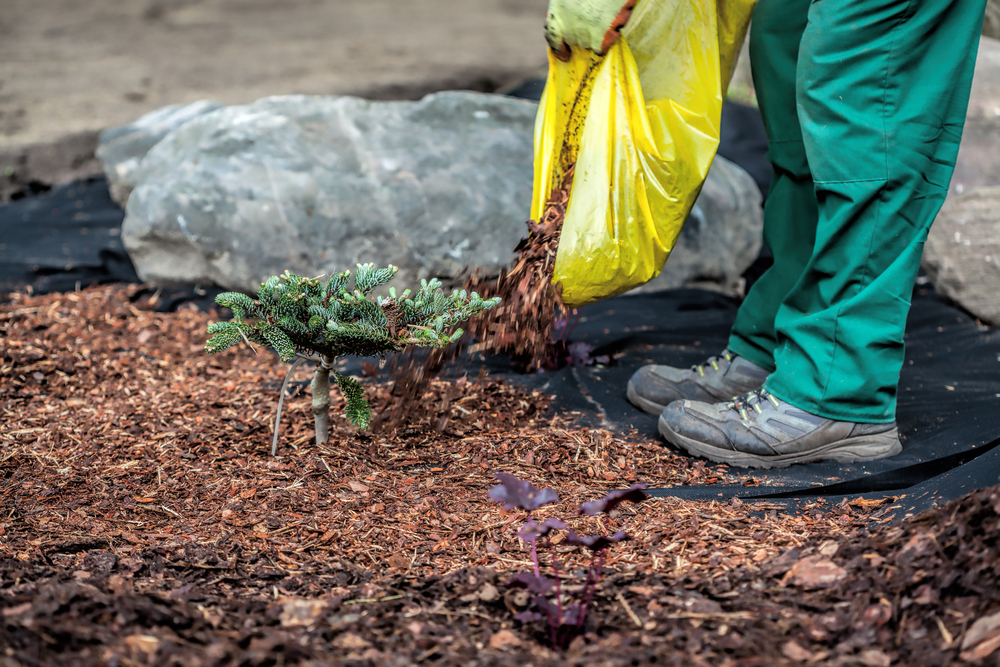
What is Mulch?
Mulch is any material laid over the soil’s surface as a cover. Here are the two types of mulch:
- Organic mulch. Includes formerly living materials such as straws and wood chips
- Inorganic mulch. Consists of synthetic materials such as plastics
Benefits of Mulching
There is no better way to sustain a healthy landscape than covering the bare soil. Beyond the aesthetics, here is why mulching is essential.
- Controls weeds
- Provides insulation for roots
- Prevents soil erosion
- Add nutrients to the soil
- Encourages earthworms to move-In
Selecting the Right Mulch for the Job
There is no perfect mulch. It requires careful consideration of each type of mulch to help you choose the best mulch for a particular setting. Several factors such as appearance, availability, and expense also play a role in determining the best mulch. If you wonder which mulch type is ideal for your landscape, weigh out the pros and cons of the following mulch types before laying it down.
Wood Chips mulch
Wood mulch is chopped-up wood material in a wide range of sizes. The variety of sizes prevents compaction and therefore allows easy water infiltration. Cedar, pine, and hemlock make effective mulches.
Pros
- Decomposes at different rates, creating a diverse environment for soil organisms.
- Readily available
- Easy to apply and remove
- Environmentally clean
Cons
- The wrong application can cause molds, rot, or suffocation of the roots
- Not ideal for every plant due to cases of nitrogen theft when wood chips are breaking down
Straw mulch
Straw mulch is a remnant of cereal and grain crops. The straw mulch prevents the grass seeds from washing off while preventing rodents. However, do not confuse straw mulch with hay as far as mulches go. The latter is known to contain weed seeds and sometimes molds. Therefore, always go for certified weed-free straws as your mulching option.
Pros
- It’s clean
- It’s light
- It breaks down quickly and composts into nutrients
Cons
- Straw mulch can be messy
- They easily blow around in wind
Rock mulch
Rocks tend to be more expensive than organic mulches. Rocks do not break down easily; hence annual reapplication is not required. Rock mulch is an excellent choice if you have drainage issues on your property as it allows quick drainage of water. When using rocks as mulch, there are essential things to keep in mind:
- A fabric weed barrier is needed underneath to prevent weeds from sprouting through the rocks
- Only drought-tolerant plants thrive in rock-mulched beds
- Steel edging is required to keep off stray rocks to achieve a tidy appearance
Pros
- They are durable
- Require low maintenance
- They are fire-proof
- They keep off weeds longer
Cons
- They are expensive
- Rocks don’t add anything to the soil, unlike organic mulches
Geotextile mulch
Geotextile is also known as landscaping fabric. It is made predominantly from starch and is 100% eco-friendly. Geotextiles are an improvement over old-style plastic mulches. They not only suppress weeds but also reduce surface evaporation. Choosing the right one can be overwhelming with so many different geotextiles. Some factors to consider are: ease of the material applied to the land, ease of water penetration, relative cost, and effectiveness of the material in weed suppression.
Pros
- No clean-up is required
- Geotextile can minimize nutrient leaching during the rainy season
Cons
- It is expensive
- Prone to blockage by residues
Conclusion
Your choice of mulch is a matter of personal taste and preference. However, mulching is not as easy as grabbing shredded straws and pouring them around your plants. There is the right way to mulch. When a professional landscaper is involved, mulching can slow the erosion process, retain soil moisture, and control weeds.
Are you looking for a reliable landscape maintenance company to advise you accordingly on your landscape’s ideal mulch? We specialize in maintenance, repair, and water-saving landscaping design. By hiring us, we guarantee you’ll get the highest quality mulch product at a reasonable price. Reach out to us.
Six Yard Maintenance Tips You Need to Know
Nothing beats the feeling of enjoying the sight of freshly mowed grass and the aroma of nature in your own yard. Spending time in your yard can help relieve stress and keep you in balance.
One common misconception about yard maintenance Rohnert Park is that you need a big budget to keep your yard looking healthy and fresh. The truth is that lawn care doesn’t have to cost you a lot of money. There are various practices that can help you save on these costs.
It’s no secret that a healthy and lush yard can boost your home’s general appearance and resale value. The landscape also provides ample space for you and your family/friends to enjoy. Below are six tips on how to take good care of your lawn in all seasons.
- Mow Regularly
Regular lawn care is one of the crucial factors contributing to a healthy lawn. As the grass grows in your yard, it needs frequent mowing. Consider cutting the grass twice a week in peak growth periods to keep it looking tidy.
Depending on the type of grass grown, cut it to a height of between 2.5 and 3 inches. Note that only one-third of the height of the grass should be cut. Also, grass grows between 2 and 6 inches in length every month.
Mow your lawn once every two weeks in warm winters, autumn, and spring. Do the same at least once every week during summer. Regular mowing makes it easier for the roots to spread further, fill up any gaps and restrict weed growth.
- Water the Yard in the Morning
Use a sprinkler to water your yard twice or thrice a week. Unless your lawn has new grass seeds sprouting, avoid watering it every day.
Water sprinklers cover the entire part of a yard, thus enabling you to get the most out of the task. Even more, watering in the morning allows water to seep through the soil with little evaporation.
Avoid overwatering your young lawns to prevent root rot. Overwatering may also hinder root growth and result in waterlogging.
- Loosen Compacted Soil
It’s common for soil to get compacted in your flower beds when the temperatures rise. Your yard may get compacted soil if animals or people step on it regularly.
If this is the case, start by removing the thick leaf layers that cover your flower beds. You should also thin the leaf layers for them to decompose into organic matter quickly. Gently use a stick to loosen the soil for oxygen to penetrate the roots.
Aerate your lawn if you notice any signs of decline or moss patches. This practice allows air and water to reach the root area faster and boost root growth/development.
- Deal with Aggressive Weeds Early
Weed out your yard in early spring to remove any aggressive or invasive weeds. If you leave them to grow into the summer, their roots will develop further, making it hard to pull them out.
You may use a pre-emergent or organic herbicide to kill the weeds. Only apply the pre-emergent herbicide for five consecutive days when the topsoil temperature is 55 degrees Fahrenheit. The chemical will prevent the weed seeds from germinating.
Spray a post-emergent herbicide (organic or traditional) if you spot weeds in your yard in spring. You should also dig out dandelions by their roots if they start emerging on your lawn at this time.
- Carefully Time Your Pruning Routines
Prune any badly disfigured or broken branches damaged by ice and snow in late winter as part of your yard maintenance Rohnert Park routine. You should also cut off any unwanted lower branches on your evergreen trees and shrubs at the same time.
If you have a summer-flowering shrub in your yard, prune it early in spring or late winter to prevent further growth. Prune your spring-flowering shrubs once the flowers start fading too.
- Mulch Carefully
Hold off any mulching tasks until the weather warms and the soil in the flower beds starts to dry out. You should also mulch the beds when you have edged them and trimmed back any broken branches on the shrubs.
Use a heavy mulch consisting of over-dyed brown wood chips or hardwood bark mulches. That’s because heavy mulches look better, last longer, and are of higher quality.
Looking for Yard Maintenance Rohnert Park Services?
Now is the right time to clean up your yard and give it the liveliness it needs. From weed control to pruning, the tips discussed in this guide can help you care for your yard, garden beds, and lawn. Yard maintenance Rohnert Park is all about creating beautiful and healthy outdoor spaces all year round.
Landscaping services are crucial if you want your yard to give a long-lasting impression. Engage a landscaping maintenance professional to create a beautiful environment around your home. Our experts will be ready to help you with whichever landscaping issue you have.


