

Landscaper Rohnert Park: Maintain a Beautiful Yard
If you have ever walked into any building or garden landscape in Rohnert Park California and you felt warm and welcome, chances are that the yard was cleaned, creatively designed and well maintained by a professional landscaper in Rohnert Park.
A well looked after yard is a sight to behold and creates a serene atmosphere that is second to none. However, this does not happen automatically. For you to enjoy a beautiful, lush and green yard, you will need to make a few investments. These include time and patience. You also have to get the right information that will guide you on the best way to go about it.
Tips From a Professional Landscaper in Rohnert Park

Fortunately, if you are looking for a landscaper in Rohnert Park, you don’t have to break a sweat. In this article you will learn how to transform your yard from a boring one into something that you can proudly look forward to come home to.
Here are different ways to ensure that your yard is elegant regardless of the season.
- Start right
Just like in every other aspect, the foundation will more often than not determine the outcome. In this case, since you will be dealing with soil, it important to have it right. In most cases the soil acidity level, commonly known as pH is high, thus hindering proper growth of grass. It is advisable to take some soil samples for testing and advice on the best way to fix any problems that may present.
It is also important at this stage to get the right information on what is the best type of vegetation to consider. There is no one size fits all vegetation. While some may be suitable for a certain location, they may be unsuitable for you.
- Access unique needs for your yard.
Whenever you have plants be it grass, trees or flowers, it is important to understand that they all have unique needs. Grass in the shady areas, for example, will need less water and fertilizer as the level of evaporation is low, and they grow less. And the opposite it also true. Having this in mind will make is easy for you when undertaking your daily yard maintenance.
- Create a monthly routine based on seasons
Different seasons present different challenges for maintaining lawns. If you have been keen to look around, you may have noticed that most people take care of their lawns during summer and barely touch them after. Unfortunately, due to the negligence, these lawns do not thrive well. To ensure that your backyard yard remains attractive throughout the year, you need to carry out specific tasks based on the season.
- Spring time is the best time to strengthen your grass in readiness for the expected warm days. It is during this season that you should rake to remove any twigs and leaves, mow regularly, apply fertilizers when the soil is moist and also sow new grass to fill in any soil patches. Remember that proper covering discourages weed growth.
- During summer, the activities are centered on maintenance activities. You will engage on more watering, mowing and applying fertilizer.
- In autumn, leaves may suffocate grass. To avoid this, there is need to aerate the yard, mow the lawns and apply some fertilizer.
- Winter season has the least activities in yard maintenance. You only need to remove any leaves that may have fallen over and avoid stepping on the grass. However it provides the best season for planting a new lawn.
A lawn make-over is just what you need if your lawn isn’t in great shape. For more tips on yard maintenance, repair, irrigation and water saving landscape design, feel free to contact us.
Shrubbery Like Boxwood, Lavender, and Camellia
Adding shrubbery to your home’s outdoor landscape is a wonderful way to frame your garden and border a winding path. One particularly popular way for doing both, or either, is with evergreen shrubs.
Benefits of Evergreen Shrubs

Evergreen shrubs are shrubs that can be a permanent fixture in your garden thanks to the fact that they will last all year.
In fact, evergreen shrubs like fatsia, lavender, and camellia can create beautiful flower displays and perfume-like scents throughout the year, even when everything else in your garden appears to have fallen dormant.
Evergreen shrubs will often be naturally variegated and create a colorful cascade of colors over your garden. Some shrubs are like trees and come with needled or broadleaf foliage.
Adding shrubs to your property will beautify the landscape all four seasons and provide a smooth transition between taller trees and the groundcover plants lining your walkway or garden.
Shrubs can be used for a number of different purposes beyond lining walkways and framing your garden as well.
Shrubbery can provide groundcover on slopes, buffer ambient noise from entering your home, and provide a breathtaking backdrop for your garden.
Boxwood Shrubs
One of the easiest-to-work-with types of evergreen shrub is boxwood shrubbery. Boxwood is hardy to zone 6, which essentially means that it will maintain its integrity no matter what nature throws at it.
Boxwood also fits most people’s initial idea of a shrub – boxwood has tiny, glossy foliage that can be hedged by Xeriscape’s landscaping experts into just about any desired shape.
Most homeowners like their boxwood shrubbery to be a few feet in diameter but, left to its own devices, boxwood can grow up to two dozen feet tall! This is a hardy shrub that will grow well in moderate sun and ligher shade.
Lavender
Lavender is a drought-tolerant plant that is a kissing cousin to mint, and each has a similar fragrance. Lavender, though, is a perennial shrub that has a lot of different size and color options to match your landscape.
There are actually four main types of lavender that homeowners in North America typically consider for their gardens: English lavender, Spanish lavender, Portuguese lavender, and lavandin.
English lavender owes its name to the English lavender trade of the 1700s and the fact that it smells so wonderful. English lavender can furnish homeowners with those variegated colors alluded to above: purples, violet, mauve, and mixtures of all three are afforded by English lavender.
Spanish lavender will come with pink and purple petals and have a unique pine scent. Portuguese lavender (a.k.a., Broadleafed lavender), on the other hand, will have paler purple leaves that are slightly larger.
Portuguese lavender can cross-pollinate with Engligh lavender, and both types are used in aromatherapy. The camphor in Portuguese lavender is good for attracting friendly insects into your garden and lending a sense of exotic variety and soothing color.
Lastly, lavandin might be a fancy name in this context since lavandin only means a cross between English lavender and Portuguese lavender. Lavandin produces sterile seeds but can grow in hot, arid climates and live through periods of sustained drought.
Camellia
Camellia is also a type of evergreen shrubbery, but the flowers of a blooming camellia are truly unique in certain species. There are more than 300 species of camellia, and approximately 3,000 hybrid species. Some camellia flowers are double.
Where does camellia work? Woodland gardens with dappled sunlight or gardens with slightly acidic soil are especially promising foundations for camellia.
Ask Xeriscape about the possibility of installing camellia shrubbery around your garden because the flowers come in a variety of beautifying colors: pinks, reds, yellows, and whites are common. Contact us for more information.
Discovering the Best Flower Bed Ideas for Your Home
Flower bed ideas are typically broken down one of two ways – by the color(s) that you’re going to be using and, secondly, by the kinds of materials you might use to bring your flower ideas to life (e.g., wheelbarrow flower beds).
Monochromatic Flower Beds
Monochromatic is a blend of two words – mono, which means one, and chromatic, which refers to color. Monochromatic flower beds are designed from blooms that are all the same color.
A monochromatic flower bed can add a splash of color to your outdoor landscape, and the thing to bear in mind is that, although everything will be one color, you can use various shades and textures to create a stunning effect.

Purples and yellows are very popular variations when it comes to monochromatic flower bed ideas.
With a purple monochromatic flower bed, you have a lot of beautiful flowers to choose from: lavender, sage, leather flower, hydrangea, and grape hyacinth. A walkway lined with lavender can be absolutely breathtaking.
A yellow color scheme is also a popular choice for monochromatic gardens. Yellow gardens let you blend in deep golden hues with paler flowers with an almost buttery accent.
The Denver Daisy – a.k.a., Black-eyed Susan – and marigolds are great for adding deeper shades of yellow to a backdrop of a more mellow flower like the annual nasturtium.
Keep in mind that blues, whites, and violet flowers will have a more calming effect in your garden whereas warmer colors like red and yellow can create instant excitment!
Dichromatic and Ombre Flower Bed Ideas
Dichromatic means two colors wheras ombre is a French word that means you’re going to be using a blend of colors that gradually blend in to each other.
If you only want to use two colors, with varying shades of each color, then you probably want to look into a dichromatic garden. You’ll also want to consider using contrasting yet complementery colors to create the most powerful aesthetic look.
If you’re feeling more adventurous, then an ombre flower bed might be the way to go. Ombre flower beds typically blend some of the cool hues and warm hues discussed above to gradually blend in flowers with a lighter hue with dark hues.
An ombre flower bed typically starts off with a walkway made of flowers of a cooler, softer hue so that the eye gradually gets more and more captivated with the darker tones at the back of the garden.
Wheelbarrow Flower Garden
Sometimes called wheelbarrow planters, a wheelbarrow flower garden can be made using a wheelbarrow that’s rusted-out, cracked, or has a broken wheel.
The wheelbarrow, though, should have holes in the bottom to allow excess water to drain out. The big benefit to a wheelbarrow flower garden is that you can move it to an area with more sunlight.
Walkway Flower Beds
As alluded to above, a walkway flower bed can be a wonderful segue into a captivating garden or a landscaping effect all its own.
Millions of homeowners have already beautified their homes with a walkway flower bed culminating with their front door.
Walkway flower beds actually touch on a difference with gardens in general – a walkway flower bed would be an example of a formal garden path with right angles and straight lines.
That said, a walkway flower bed could open up into an informal pathway kind of garden (the second type) where you would have a meandering or curved path. A crescent-moon type of garden in the front yard would be an example of this second type.
Which flower bed ideas appeal to you most? Contact us for more information.
Four Main Types of Irrigation Systems
Reduce water output by simply installing an irrigation system in your garden. These systems help to conserve more than half the amount of water that’s normally used when watering plants manually. Encourage and practice smart water usage techniques when using any of the four main irrigation methods. See these methods below:
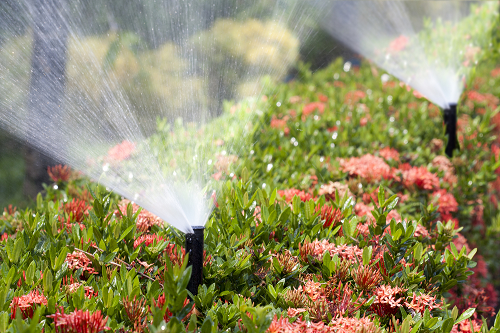
- Subsurface irrigation– This is one of the most frequently used irrigation methods. Homeowners set up this system by applying water underneath the soil. This technique can be altered if the water table is low. When this happens drip or trickle devices can be used as an alternative and be turned on when planted below the soil in direct contact with the plant’s root.
- Surface irrigation Gardens with medium to fine soil textures would benefit from this type of irrigation system. It is also works well with flat sloping land due to its ability to use gravity and siphons to transport water.
- Sprinkler irrigation sprays water through the air and the devices can be either be portable or permanently set in place. Water is pumped through a piping system , sprayed through the air via spray heads that are designed to break the water up into small droplets which then fall on your lawn.
- Drip/trickle irrigation Ever heard of micro-irrigation? This method can be defined as a way to save both nutrients and water all at the same time. Water should be applied in the root zone either from above or below the soil’s surface. This type of system can be more efficient than other methods of irrigation once it is well designed, installed, maintained, and operated.
By now you should have an idea of the factors that influence your choice of irrigation system. Examine your soil type, water table and personal choice etc. Choosing the best type of irrigation system should be your no.1 priority. The right amount of water supply is crucial in maintaining the health and of your garden. You want to create a landscape that is beautiful and lustrous. Contact us today for more information.
Why is Fertilizer Necessary? Is Organic Really Better?
Fertilizer has a host of nutrients that will enable your lawn and garden to reach its full potential, which really everyone wants.
The shocking thing is that fewer than half of home gardners in the United States use any kind of fertilizer in their yards, according to a Gallup Gardening Survey.
Why is Fertilizer Even Necessary?

Basically, if you’re not using some kind of fertilizer to nourish your lawn and garden, then your grass and plants aren’t getting the nutrients they need to thrive.
Even if you’re fortunate enough to live on a property or area of the country with fantastic soil, your plants will naturally pull nutrients from the soil to grow. This process depletes the soil and underscores the need for any homeowner serious about lawn care and gardening to invest in a good fertilizer.
The more plants that you have in your garden and the more depleted your soil, moreover, the more that you’ll benefit from fertilizer. Xeriscape can come by and measure your soil’s PH and perform a soil analysis to detect the levels of critical nutrients.
When you get the right fertilizer for your lawn – the “right” fertilizer is one that helps overcome particular deficiencies with your soil – you’ll have more beautiful flowers and much healthier produce.
Nitrogen, Potassium, and Phosphorous
Nitrogen, potassium, and phosphorous are particularly important nutrients found in all fertilizers. Nitrogen allows plants to grow more robustly by giving plants the proteins needed for plants to create new tissue in the growing process.
Your plants will be constantly assimilating carbon, hydrogen, and oxygen from the ambient air and water, but nitrogen is something that plants don’t always get in adequate amounts. That’s why plants gorge on nitrogen when the nutrient is around.
What about potassium and phosphorous? Potassium serves a number of different functions for your plants, including: helping your plants fight off diseases, improving your plants metabolism, and improving your plants’ ability to create carbohydrates.
Phosphorous is also critical for plant growth since it gives your plants the nutritional tools to grow strong roots, flowers, buds, and new seeds. Plant’s need a PH level of around 6.7 to effectively absorb phosphorous. Set up an appointment with Xeriscape to make sure your soil’s PH is good.
Micronutrients Calcium and Magnesium
After getting in to this trio of all-star fertilizer nutrients, you should know that nitrogen, potassium, and phosphorous are known as fertilizing macronutrients (really important!) but fertilizers also contain secondary micronutrients.
Secondary nutrients include calcium (used for fighting diseases and cell membranes) and magnesium. You might want to consider using an organic, at-home fertilizer like eggshells because these lower your soil’s PH and provide calcium to your plants.
Magnesium is actually hugely important and almost considered a macronutrient since plants need this nutrient for chlorophyll and turning sunlight into energy. Plants couldn’t really grow without magnesium!
Organic and Synthetic Fertilizers
Organic and synthetic fertilizers contain many of the same nutrients, but the source of each is different and each enters the soil to nourish plants at different rates. Organic fertilizers enter plants more slowly, so now is the time to apply organic fertilizers.
Compost, manure, and mulch are organic fertilizers that might work for your yard. Home garden experts recommend applying organic fertilizers like those made from plant and animal byproducts (e.g., bone and plant meal) in the fall so that the soil can assimilate those nutrients over many months – in time for spring’s blooms!
If you determine with Xeriscape that your garden could benefit from a quicker-acting solution, then a synthetic fertilizer might be more desirable.
Synthetic (man-made) fertilizers are often cheaper than organic alternatives, and synthetic fertilizers let you get the exact combination of nutrients that will enable your lawn and garden to thrive! Schedule an appointment with Xeriscape today and have your soil tested. Contact us for more information.
Strategies for Getting Your Lawn Ready for Cooler Weather Ahead
Although the month of August is in what people call the dog days of summer, you have to realize that the first frost is right around the corner. The season’s first frost might well come at the end of August or early September.
When the first frost of the season hits, most of your annual plants will wilt and perennials will be sent into their dormant phase for the hardier winter months ahead.
While these effects can’t be avoided, there are a lot of steps that you can take to fortify your lawn for winter.

Keep Up Irrigation
Your lawn has a kind of wisdom all its own. In the fall, the grass will stop putting so much energy into growing new blades and put those resources into creating a resilient root system to survive the coolet months ahead.
The thing to realize is that you have the chance to significantly strengthen your grass’s root system by watering your lawn right now. Xeriscape is a landscaping and irrigation company that can give your yard the nourishment that it needs.
Your lawn will naturally grow less bounteously in the late summer and early fall. That said, your lawn will still benefit from giving it the three main ingredients that it needs to grow – nitrogen, potassium, and phosphorous. Xeriscape can help here as well.
Repair and Weed
There’s an expression that when you fail to prepare you actually prepare to fail. That might sound harsh but what’s undoubtedly true is that homeowners who have an eye towards the future usually have the best yards.
Think of late summer and early fall as your opportunity to create a lush landscape for spring next year. Xeriscape can help you fill in bald patches, or you could look into a grass repair kit that includes seed, fertilizer, and mulch.
After you’ve done the real heavy lifting by repairing bald spots, you might want to look into uprooting weeds so that everything can grow to its full potential.
The thing to bear in mind is that weeds can fortify themselves and regrow with renewed vigor in early spring next year if they’re not dealt with soon.
Rake Up Leaves
A lot of people are loathe to rake up their leaves because they have such a beautiful appearance in your yard.
That’s true – a defoliating maple tree, for instance, can be breathtaking….and, at the same time, be ruining your yard and actually jeopardizing your health!
Lawns have to breathe in the sense that leaves that are allowed to linger on your lawn will prevent sunlight and air from getting to your lawn, which will cause your grass to be less healthy than it otherwise would be had you raked right away.
Leaves also decompose very slowly so that, if you don’t rake leaves in the fall, you’ll have a layer of basically intact leaves over your yard all winter. Snow mold and brown patch are both serious possibilities if leaves are allowed to linger all winter.
Fungal infections and health problems could also crop up if you don’t rake away leaves. Xeriscape can help with all kinds of landscaping, including getting leaves off the property. Leaves that get matted now could prevent fresh grass from growing in the spring.
Use Leaves to Compost
All of those leaves that you’ll eventually rake up can be put towards composting in the spring. You might want to consider putting fallen leaves in a compost bin and allowing decomposition throughout the winter. Turn the compost over regularly to have consistent temperatures, or simply rely on Xeriscape for your lawn care needs! Contact us for more information.
Lawn Maintenance: The Importance of Lawn Treatments
If you love your lawn (which we are sure you do), then you know the importance of lawn care and that it goes beyond watering and mowing. Yes, these two are the foundation for a healthy lawn, but lawn maintenance is a complex science, involving feeding, aeration, and controlling insects and weeds.
Benefits of Lawn Treatment
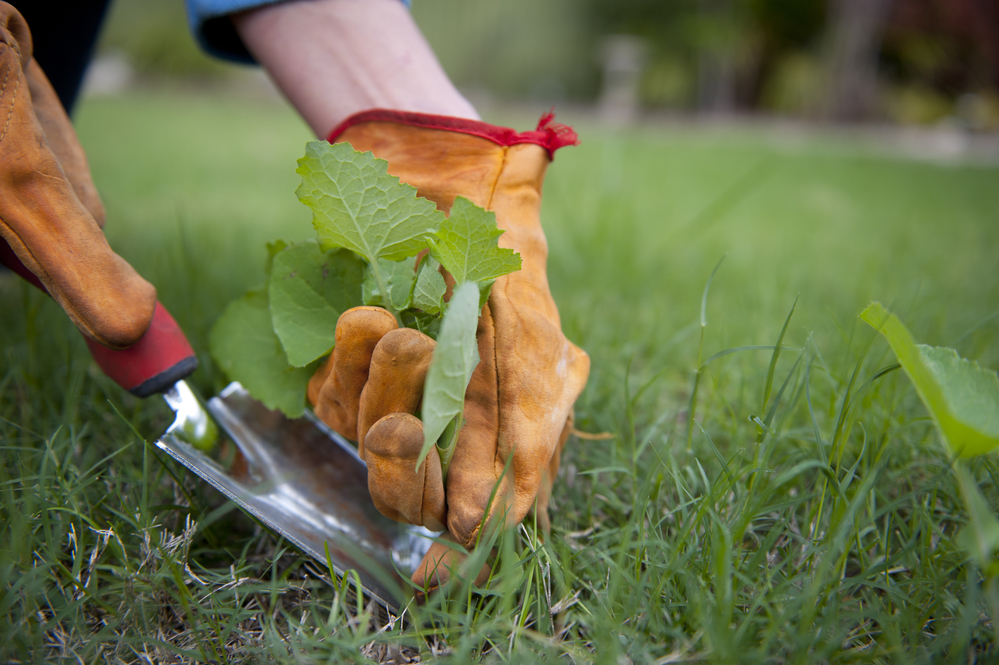
Proper lawn care ensures that your lawn can withstand threats from lawn-damaging weeds and insects. It also ascertains that your flowers, grass, and shrubs can fight-off diseases. Furthermore, lawn care ensures your turf can survive unpredictable weather and guarantees your lawn is ever nutrient rich.
However, seeing as it is time-consuming and a difficult undertaking, we recommend you engage professionals. Here are five benefits of hiring experts.
- Expertise
You might be a proficient landscaper, but there is knowledge and services only professionals can provide. They understand the shrubs and trees better and know the different grass varieties. They can often tell what is ailing your greenery in an instant and prescribe the best treatment program. Moreover, seeing as they understand the local climate, and have years of experience, they will engage in preventive measures to ensure your lawn can ward off seasonal pests and diseases.
- Avoid Accidental Damage
64% of American believe that all grass should be fertilized during spring while another 57% believe a lawn is not healthy if it is not green. These are false believes that lead to damage by over-fertilizing and leading to a high accumulation of salts in the soil.
Lawn treatment services, on the other hand, avoid common mistakes know how to treat your plants.
- Cost Effective
It might sound counterintuitive, but engaging professionals is cost-effective. Think about it; you will have to invest in equipment such as mowers, aerators, and brush cutters, invest in chemicals, and fertilizers. Furthermore, given that there is a period of trial and error, there is a high likelihood that you will be paying to correct mistakes.
However, with professionals, you will not pay to correct mistakes, and you don’t have to invest in the equipment and chemicals.
- Property Value
If you are considering putting your house on the market, you can increase its value by proper lawn treatment. Lawn maintenance can increase the value of your property by up to 15%. Who wouldn’t like that?
Hiring lawn care experts is the only indisputable way to ensure that your lawn is always in pristine condition.
- Consistency
As a homeowner, there is a likelihood that work, plus maintaining your lawn can be overwhelming. It will be challenging to create let alone observe an effective lawn care routine.
However, lawn maintenance experts ensure that your greenery, is trimmed, fed, and watered consistently. They also handle far more, and the result is a healthy lawn, and one that you can enjoy.
Conclusion
Though it is a demanding task, lawn treatment is of utmost importance. It improves air quality while maintaining the aesthetics of your home. Engaging the services of a professional ensures that your lawn is ever impeccable, it saves you money, and keeps you from physical labor. You can contact us for all your lawn maintenance, repair, and landscape design needs.
Rock Garden – It’s More Than What Meets the Eye
Contrary to popular opinion, there is more to a rock garden than a garden filled with rocks. In reality, it is a blend of plants and rocks complimenting each other.
Unlike easterners, mainly Japanese who use rock gardens to find enlightenment, we in the west are more focused on creating beautiful spaces that are a pleasure to look at and relaxing.

Before we get into how you can use the rocks, here are some few benefits of having a rock garden.
- First, these gardens can survive harsh climate. You can throw anything at them from extreme winters to sweltering heat, and they will endure. Strong winds or droughts will no longer be a concern.
- They are low maintenance. Unlike customary gardens, these are easy to maintain as they don’t require frequent feeding, watering, mowing, aeration, or control of pests. Moreover, the rocks can be placed around the plants to control weeds reducing the need for chemical control. They are ideal for people who lead busy lives.
- Also known as Zen gardens, you will appreciate that they look great all year round. However, you should use a combination of plants that bloom in spring and summer together with evergreens and fall foliage.
- Rocks allow you to create depth and diversity by combining tiny pebbles with large boulders.
- Rocks also create the illusion that your yard is large. Seeing as you use fewer plants than traditional yards, you create the perception that your yard is extensive.
How you can use rocks around the garden
You can use different stones to create a specific impact depending on what you want.
First, if you are looking for ambiance or a casual, laid-back garden, an area you can sit and relax; we recommend beach pebbles or river rocks. These add warmth, are pretty inviting, and are customizable seeing as they are available in various sizes and colors.
You can also use rocks to control weeds. Place them around your plants and flower beds, and fill up those empty spaces between plants as mulch.
You can use white marble chips to create a cheerful and bright space. They are especially useful in shady areas as their bright color will contrast with the dark soil and general ambiance there. You can also use dark marbles to balance out a bright area.
A rock garden will come in handy if you have a steep slope or uneven surface. Some of these spaces are difficult to mow and maintain. However, you can use rocks to transform it into a showcase of more delicate plants.
You can also use stones to create a border around your ponds. They are great for camouflaging the liners and creating contrast with the water for a dynamic look.
Conclusion
Rock gardening can give you a sense of sophistication and class. It is rare but beautiful, and the rocks and greenery compliment each other superbly.
However, it takes expertise to create a terrific rock garden. There is a ton of technical knowledge and experience required, and we encourage you to hire professional landscapers. You can contact us to book an appointment for garden maintenance, irrigation, water saving landscape design, and rock gardens. Contact us for more information.
Landscaping Ideas Just in Time for Spring
Spring is the ideal time to take stock of your yard’s overall health and consider a few landscaping ideas. It is also a good time to remove broken branches and have shrubbery pruned back by a professional landscaping company.
First: Test Your Soil

Testing your soil and having your lawn fertilized could also be a helpful practice to get into at this point in the season.
When you have your soil tested, you’ll receive a rundown of your soil’s pH level as well as whether your soil has the right mix of nutrients to allow bushes and flowers to thrive.
The great thing about getting your soil tested early is that it gives you time to respond.
If your soil is missing a particular mix of nutrients, for instance, you’ll be able to have a professional landscaping company like Xeriscape fertilize your lawn to get the perfect blend of nutrients.
Mix Enclosure and Openness
The root word for garden is actually enclosure. With a great outdoor landscape, you’re actually looking to blend an enclosed space with the openness of the great outdoors.
There’s even something called the law of significant exposure to guide your landscaping ideas.
The idea behind this is to create a sense of refuge while allowing you and all of your guests to bask in the outdoors.
The law of significant exposure says that the vertical top of a space should be at least a third of the horizontal length of a space.
How does this all work in practice? If you have a patio that’s 21 feet wide horizontally, then a nearby hedge or overhanging tree should be at least 7 feet tall (3:1 ratio) so that there’s a comfy sense of enclosure. The same thing applies to gardens.
Create Multiple Seating Areas
Installing different seats and tables for different purposes and different times of the day is one of the best landscaping ideas out there.
A hammock deep in the yard, if you have the space, would be great for relaxing. A pair of set-off seats might be nice for enjoying a coffee in the morning or a cocktail later in the evening.
On the other hand, a table and perhaps a few couches would be ideal for entertaining guests or bringing a few plates outside and enjoying dinner al fresco!
Start with the Big Stuff
You might have to fight off the temptation to immediately plant your perennials in the sense that there are practical and design benefits to planting the big stuff before the small stuff.
Landscapers recommend going from planting trees and shrubs to dealing with perennials and ground cover.
You should start with something bigger like a tree because doing so gives you an anchor and an idea of where you’re going structurally.
It also prevents you from trampling newer planted flowers if you have to use a tractor or other heavy machinery to get your trees and shrubs into position.
And remember to follow the law of significant enclosure (mentioned above) and ensure, for instance, a small tree abutting a garden is at least a third the height of the garden’s width.
Variation Within Consistency
Repeating similar tones and textures in your garden often achieves a more powerful effect than experimenting with a bunch of individually interesting but collectively jarring colors.
A few different varieties of ferns lining your walkway and leading into the backyard achieves a consistent yet beautifying effect as opposed to dozens of mismatched plants and exotic flowers.
Summing it up, landscaping ideas should revolve around a sense of enclosure, comfort, and intriguing consistency of textures and tones. Contact us for more information.
Tips for Choosing Landscaping Shrubs
Shrubbery plays a great role of defining the visual space of your front yard and also guiding visitors to your doorstep. Since they come in variety in terms of color, shape, and size, the task is to pick shrubs that match your needs. The variety also gives you the freedom to ensure that your yard is as appealing as it can be. Consider the following tips when picking the right plants for your landscape.
Size of the shrubs

When it comes to choosing size, you need to be thorough. The secret here is to choose the ones that complement other trees and flowers in the landscape. Proximity to other plants is also a factor to consider. Their placement in the garden should be such that it is easy to care for them as well as other flowers and trees.
Where to plant and why
In most cases, the function of the bush determines where you should plant. As you may know, shrubs have different types of shrubs have different functionalities and hence you need to consider this before making a choice. For instance, long bushes are most suitable planted near the home as they will help control the climate during summer and winter. On the other hand, if you have a sloppy area that is susceptible to soil erosion, you should go for low growing plants. These will spread fast and within a few years you will have the slope completely covered.
Their closeness to other plants
Some bushes tend to grow tall and can shade other landscape plants from getting enough sunlight based on where they are planted. If you want them to be close to other plants, then you should consider planting the larger ones should fall on the northeast side. If you feel that the shrubs will interfere with the sun exposure to other plants, then the smaller ones are most suitable.
Color choice
Shrubs come in different colors and there is a color for each season. Since adding color to your landscape is one of the major reasons for having a shrubbery, you need to be keen when choosing the right colors. There are a variety of green shades to choose from, which help add interest to your landscape. The flowers is also another factor to consider when it comes to choosing the right bushes. Some common colors available include white, red, and blue. You can plant each color in between. There are also some plants that produce colorful berries which is a plus since they can feed birds in your garden.
Growing conditions
It is always wise to think about suitable climatic conditions for a particular plant before planting it. If you are in the south or southeast where the climate is a bit hot, you need to go for drought resistant shrubs. If you are in the north or northeast, consider cold resistant bushes. Another factor to consider in this category is the salinity. If you live near the beach where salt level are a bit high, choose plants that can withstand the condition.
When choosing shrubs for your landscape, always make sure you choose the ones that complements you yard in terms of color and size. The period the plant will last in your yard should also influence your choice. Contact us for more information.


