

6 Lawn Treatment Tips From The Experts
You’ve created the perfect lawn in your outdoor space. The soil is fertile, and the grass is ideal for your area. But to keep your lawn in peak condition, it needs regular care. The following are six lawn treatment tips recommended by landscaping experts.
- Mowing

What’s the perfect length for lawn grass? That depends on your preference. However, for easy maintenance, you should not allow the grass to grow more than 10 cm.
Experts recommend trimming only one-third of the grass’s length. Cutting the grass too short increases the chances of drying, weed infestation, and disease.
- Edging
A neat lawn has well-defined edges. Use a sharp pair of shears to stop grass from growing over your borders. Edging not only promotes neatness but also gives your lawn a satisfying finish.
If possible, install permanent edging – a border that grass cannot grow over or cross.
- Watering
Inadequate watering causes the grass to change color. Besides, well-watered grass has a spring; it doesn’t remain flat after walking on it.
How much and often you need to water your lawn is dependent on the weather. Remember, overwatering is just as bad as underwatering. Soggy soil discourages healthy growth of roots.
For best results, water your lawn early in the morning.
- Feeding
Want a greener, healthier lawn? Feed the grass.
Nitrogen is particularly essential for vibrant and green grass. A soil test will help you determine the amount of nitrogen your lawn needs. Other essential nutrients include phosphate and potash.
The typical lawn requires feeding twice a year. In the spring, apply a nitrogen-rich fertilizer. In fall, it is advisable to feed your grass with high levels of potash and phosphate.
Whichever lawn feed you choose, strictly follow the guidelines on the package.
- Weeding
Weeds prevent the healthy growth of grass. The best method of weeding is uprooting – pulling the weed together with the roots. You can weed manually or using a tool. But in cases of severe weed infestation, you might need to use a low-toxicity herbicide.
- Removing thatch
Thatch refers to the organic matter, made up of dead leaves, grass, and stems, that forms a layer above the soil. The buildup of thatch prevents water and other nutrients from penetrating the soil.
Methods of removing thatch include raking and scarification. You can find a good rake or scarifier at your local gardening store.
Keep your lawn lush, green, and healthy using the lawn treatment tips shared above.
The One-Third Rule of Pruning Shrubbery
Pruning your shrubs can give your entire landscape an amazing aesthetic appeal. Ideally, there are typically two types of landscapers when it comes to pruning shrubbery; those who prune timidly from fear of damaging their bushes and those who prune aggressively to come up with perfectly shaped shrubs. However, to achieve the best outcome when pruning your bushes, trimming about one-third of the good wood is ideal.
If you prune more than this, you risk exposing your shrubbery to excessive damage, which could stunt its growth. Prune less than this, and you might not do much to improve the appeal of your shrub.
Read on to learn about the one-third rule:
Why The One-Third Rule?
Moderate pruning is pivotal when it comes to stimulating vital growth. Plants typically live in a balance between the below-ground and above-ground parts. Once the plant loses a number of stems through pruning, it tries to gain back the balance by pushing forth new growth. This regrowth is essential, especially in moderation, since it allows the plant to heal as well as simulates growth from dormant buds.
If your shrubbery loses too much leafy growth, it goes into panic mode. This can be shown by the appearance of water sprouts or suckers, which can leave your shrubs ragged looking. Even worse, this suckering can go on for a long time, making landscape maintenance tough.
Use the Rule on Established Plants
The one-third rule is ideal for your fully established shrubbery- plants that have overcome their transplant shock. If you have newly planted shrubs, give them a grace period of one or two seasons before pruning them to ensure that their root systems become established enough.
Use the rule on small ornamental trees and shrubs. As for larger shade trees, limit pruning to at most a quarter of the total branches. While growth on shade trees is stimulated into new growth through assertive pruning, its pruning shouldn’t be as vigorous as that of multi-stemmed shrubs. Pruning the trees often is vital since it reduces the chances of wind damage.
When Might The one-third Rule Not Be Enough?
If you neglect your shrubbery for too long, it might overgrow and get out of control. Normal pruning might not suffice. For such shrubs, rejuvenation pruning (a severe form of pruning) might work. While rejuvenation pruning will leave the shrub looking unattractive for a while, it allows it to reform itself into a better shape.
As long as you show your shrubs love, they will light up your landscape. Pruning ensures that you can shape your shrubs to fit right into your ideal landscape design. Consider using the one-third pruning rule to improve the appeal of your landscape.
Three Irrigation System Maintenance Tips To Grow Green Grass
It is always amazing to see your landscape thrive with green grass. However, the work that goes into ensuring that your landscape remains as healthy as you want it to be should never be ignored. Among the easily forgotten parts of landscaping is the maintenance of irrigation systems. Without enough care, a damaged irrigation system can result in your lawn getting excessively irrigated or failing to get enough water.
Here is how to maintain your irrigation system:
Perform Regular Checkups

You should inspect your irrigation system a couple of times each season. Ideally, the first check should be at the start of the season, with the next one somewhere in the middle. If possible, try checking the system each month. You should confirm that the controller is plugged in and functional, correct the date and time, ensure that the wires and connectors are still connected, and replace the backup batteries. Also, it might be ideal to turn on each individual green grass zone, checking for damage and leaks.
Flush The System Regularly
If left unattended, your irrigation system can become clogged. Clogging can arise from the accumulation of debris, as well as the use of contaminated water and regular wear and tear. Before the start of any season, flush your irrigation system to get rid of this accumulated debris.
This will allow water to flow smoothly through the pipes as well as the nozzles. Aside from flushing, take measures that increase the efficiency of the system’s filtration, install screens on every sprinkler head, and replace any clogged nozzles.
Take Care Of The Sprinkler Heads
Assuming that your irrigation system’s sprinkler heads are in splendid shape can be a mistake. Sprinkler heads go through wear and tear throughout their lifetime, which increases their chances of the sinking or the breaking of the heads.
Some of the key reasons behind wear and tear include damage from lawnmowers, improper installation, shifting of the soil, and regular wear and tear. For you to maintain them optimally, you should replace the missing or damaged heads before proceeding to water your lawn. It is better to install your irrigation system on swing pipes as there is a reduced chance of damage since they ‘float’ within the soil.
A damaged irrigation system might be the reason behind your grass having brown spots, or failing to grow healthily from being overwatered. Other than ensuring that you can enjoy green grass, maintaining your irrigation system also helps preserve water. For a better experience watering your lawn, consider purchasing smart irrigation systems. Contact us for more information.
4 Reasons Why You Should Add Mulch to Your Landscape Beds
As the weather warms up, it is the best time to prepare your landscape bed. Mulching is often the go-to method for weed control. However, not everyone knows that, when done right, its benefits extend beyond weed control. Here are 4 good reasons for mulching your landscape beds.
- To Conserve Soil Moisture
Layers of mulch reduce the amount of water evaporating from the soil back into the atmosphere. In hot weather, they ensure that plants get enough water.
Mulch also reduces soil temperature, which is necessary for healthy growth. Too much heat can cause soil to become sterile by killing helpful organisms. In the winter, it keeps the soil warm at optimal temperatures that are necessary for plant’s survival.
- To Add Organic Matter
Mulch that is made of organic material will break down and enrich the soil. It will enhance the soil’s ability of retaining essential nutrients. Magnesium, potassium, calcium and iron are some of the minerals that are added by mulch and retained by the plant. Compost also improves the soil by changing its texture. A layer of compost creates a good environment for worms and other living organism to aerate the soil.
- To Prevent Trauma Caused by Mowers
It protects tree trunks from lawn mower blight and trimmer trauma by creating a protective layer. However, it is important to leave some room between the mulch and the tree trunk to avoid rot due to moisture
- Weed Suppression
Compost denies weed seeds the sunlight they need to germinate. This is often effective in controlling weeds and preventing stunted growth in plants.
While these four are the most important benefits of mulching, there are other reasons why it is a good practice. If you choose the right material, it can enhance your lawn’s appearance. It can also protect ornamental fruits from getting damaged while sitting on the ground for too long.
To enjoy the benefits, you must choose the right material. Organic mulch can be made from one or a combination of the following materials:
- Shredded wood
- Shredded leaves
- Pine straw
- Hay
- Compost
- Bark chips
- Straw
Wrap Up
From improved appearance to healthy soil for plant growth, the benefits of mulch are endless. It is no surprise that this technique is regarded as one of landscaping’s secret weapons. If you would like to hire a professional service for your maintenance, repair, irrigation and landscape mulch needs, you should talk to us. Call us or contact us online today to get an instant quote.
A Xeriscape Guide to Cold-Winter Gardening
Xeric plants thrive on any climate and can flourish on extreme temperatures, extra water, dry conditions, low light, or lots of light. Xeriscaping is one of the best ways of planning an economically and ecologically sound garden. Xeriscape winter gardening can be rock-filled, lush, and can also feature different types of fauna.
The Winter Gardening Challenges

Winter temperatures can cause stress to plants. During winter, there are less angled rays and diminished sun exposure. Rainfall is also limited, meaning that regular irrigation may be needed. The soil type, wind exposure, and the slope must be considered before selecting winter gardening plants. Winter is open to elements such as extreme cold and dryness.
The temperatures may also get to the freezing level. Tender plants need to be located to sheltered locations to keep them from the winds and dryness. Be careful to watch out on slopes. These are of particular concern given that they face moisture runs and winds, which could then create dry conditions. The arrival of winter does not mean that your xeriscape garden cannot thrive.
Go Native
Native plants are adapted to the local weather conditions and soil. They do not require much water and can survive in harsh conditions. These plants support bees, birds, and other wildlife by offering shelter and food. Native flora also protects your yard from wildfires.
Hydrozone
Select water-wise plants during winter, and group them wisely. The same way you would cater to beds based on the plants’ particular needs for sunlight should be the same logic used for water usage.
Plants that need lots of water need to be grouped together. The same applies to native perennials. When selecting your plants, look for those that can keep moisture trapped inside for longer. These are plants with thick leaves and fine hairs.
Maintain Proper Drainage
Xeric plants thrive most in rocky environments, meaning they don’t tolerate too much rain. These plants should be planted in soils with organic matter and little clay. They should also be planted on raised mounds for better water drainage. Instead of raking leaves, use them to mulch the ground. This is an organic layer that encourages nutrients to penetrate the ground leading to a lusher yard.
Xeriscaping is an excellent winter gardening that eliminates the need for supplemental water. It varies from natural landscaping due to the emphasis on the selection of plants that conserve water. For all your xeriscape landscape maintenance needs, call us today or contact us online.
Tips for Yard Maintenance Rohnert Park During the Dry Season
Taking care of a landscape is hard enough when the weather is on your side. When a drought hits, it might become harder to do so. From your grass losing color to reduced resistance to pests and diseases, you might easily start yearning for the weather to get back to normal. As if nothing could get worse, some locations have water rationing laws that you need to follow.
Sure, planting a drought-tolerant landscape can help keep your yard looking green, but this won’t help you if you have a normal landscape. Luckily, there is still a lot you can do to keep your garden looking great when the odds are against you. Besides, you will only need to weather this bad season in preparation for landscape-friendly seasons.
Here are a few tips to keep your lawn looking amazing:
Adequate Water Is Essential For Yard Maintenance Rohnert Park
When drought hits, you need to ensure that your plants get enough water- at least one inch of water per week. This can be done in two sessions. If you are using a sprinkler to do so, you might have to water the plants for a few hours in each of the two sessions. Small watering sessions of 15-20 minutes might not be enough, as water will barely make it into the roots of the plants.
Your watering schedule will also affect your plants’ health, especially if you have to work against water restrictions. Watering between four and seven o’clock in the morning will help keep your plants healthy while avoiding evaporation from the midday heat. Since the water will be deep-seated in the soil, this will allow the roots to grow into the soil to get to it. In turn, this reduces their susceptibility to burning out.
Reduce the Traffic On Your Lawn
Life is hard enough for your lawn without the added foot traffic. Add this, and the grass will be exposed to more traffic, leading the need for future renovations- if the grass survives at all. If possible, restrict your parties to the patio.
In case you have kids, encourage them to play away from the grass. Once the drought passes, these simple sacrifices will be worth it.
Watch How You Fertilize Your Yard
Ideally, you should use nitrogen-rich fertilizer to fertilize your plants. This will produce plants that are deeper-seated, greener, and lower in salt. Healthy soils tend to contain microbial and macrobial life, and most of these animals don’t thrive well in salty environments.
Your rate of fertilization also matters, and moderation is key. If you over-fertilize your lawn, you will either kill it or turn it into a jungle.
Be Prepared For Lawn Recovery
By nature, your lawn is supposed to grow dormant during the drought period- as a way of self-preservation. In this period, it reduces the rate at which it uses resources. Once the drought passes, and you provide enough water and care to your lawn, it will grow regularly and turn green once more.
As such, you need to start preparing for the end of the drought months by stocking up the necessary yard maintenance Rohnert Park materials. For instance, the soil will require aeration to ensure that moisture, air, and nutrients make it to the grassroots. In areas of thinning turf, you might also need to overseed or reseed the affected areas.
Saving water and having a green lawn are actually strategies that can co-exist. In turn, you get to enjoy an amazing landscape when the odds are against its growth. Furthermore, if you maintain a green yard, you won’t have to replant your landscape once the drought passes. You don’t have to do all this yard maintenance by yourself. Feel free to contact yard maintenance Rohnert Park professionals to help your yard survive the drought.
Winter Gardening: How to Maintain a Healthy Garden during Winter
Winter can be a rough time for your garden. From heavy snow to frost forming on the soil, it might seem as if all odds are against your garden. The good thing is that growing a healthy garden during winter is easy as long as you know your way around during winter gardening. If you manage to keep your garden healthy throughout winter, the chances are that it will look even better when spring arrives.
Here are a few insights for caring for your garden throughout winter:
Water Wisely
You need to be careful with the time you water your garden during winter. If you water during the extra cold times of the day, the water might freeze, leading to frost damage. The best time to water your plants would be during the warm times of the day. Since plants tend to absorb water slower during the winter days, and the warmth helps ensure that it flows efficiently through the plant’s system.
Mulch Your Garden
Mulch can not only help to preserve the warmth of the soil but also keeping weeds away. By improving the warmth of the soil, you increase the pace at which water can be absorbed by the plants. It might be wise to use leaves to create mulch, especially after you let them rot since leaf mold discourages the development of weeds. Collect some fallen leaves and layer them over the soil.
Introduce Microclimates into Your Winter Gardening
During winter, you want your garden plants to receive sunlight, but not the cold. This is something that creating a microclimate can help you with. Ideally, this involves creating a greenhouse effect on a smaller scale, and using cold frames can be useful. This will require you to house your garden under a transparent material that will let in some sunlight, but it is hard enough to keep the cold temperature out. Of course, you can always keep these materials away during the hotter months.
Remove Unhealthy Plants
If left to reside alongside the rest of your plants, unhealthy plants can easily spread pests, fungi, and diseases to the rest of your garden. This is the last thing you want for your garden during winter. Get rid of the spent plants. As for any plant that is finished, but is disease-free, uproot it and bury it in your garden. Doing so will revolutionize your winter gardening by introducing organic matter to the soil and improving its general health.
Winter gardening requires a little bit more effort and attention to detail. Show your plants some love during this time, and you can expect them to blossom during the warmer months. Consider the winter gardening tips above to improve the health of your entire garden. Contact us for more gardening tips.
Inspiring Landscaping Ideas for your Front Yard
Every homeowner dreams of a lush and colorful garden in their front yard. While upgrading the front yard with striking landscaping ideas can boost the appeal of any home, it also needs a lot of inspiring ideas for skillful execution.
You can enhance the appeal by settling for the right edges, flowers, shrubs, and plants to complement the aesthetics of your home. Before beginning to design your front yard, create an inventory of the space available. Because there are numerous ideas, decide on the one that best suits your space.
1. Lighting
If you believe your home is a masterpiece, then your landscaping becomes the stage you want to proudly display in a luminous halo. Because every stage has its footlights, your front yard alike needs perfect illumination.

From scene stealing fixtures to subtle accent lighting and canopy to flood, you are sure to find the right option for every style. Inlaid lights for instance show off your landscaping ideas while antiquated lamp-style lighting direct your visitors to your front door after dark.
2. Accent Color Tree
An accent color tree can magically transform your yard by adding seasonal color, scale, shade, and overall structural interest. Choose a species that work for your climate, personal preference, and the design of your landscape.
Going for a small tree with bold colorsto offer your home strong visual appeal. A flowering cherry for example gives the best highlight during spring while a Japanese maple creates vibrant foliage color in autumn.
3. Urns
Classic urns go beyond holding flowers, cremated ashes, and wine, among others. Today, these curvaceous structures are used for many styles as decoration items especially in the front yard.
Large urns add carb appeal by popping color to the garden and serving as fountains. Whether you choose to fill them with plants or leave them empty, urns can be a powerful art element with endless textures, glazes, and forms.
4. Omit the Lawn
Even if you live in an evergreen environment, you can still omit the lawn to create a unique landscape. Avoiding a lawn means you will not spend too much time maintaining it. It means enjoying your outdoor living space in all seasons.
When planning your front yard landscaping, pay special attention to the entrance to ensure it is clear and inviting. Unique structures, plants, trellis to block the wind or rain can do the trick. Remember that every façade has a visual asset and liability. A properly and creatively done front yard goes to highlight the strong points and mask the unattractive ones. Take these landscaping ideas to give your home the highlight it deserves. Contact us for more information.
The Basics of a Sprinkler System Design
A sprinkler system design keeps your lawn adequately irrigated and lush when you are traveling or cannot water your grass by hand. Designing your sprinkler system is creating insurance for your compound, which means that you should grasp all the basics before signing up.
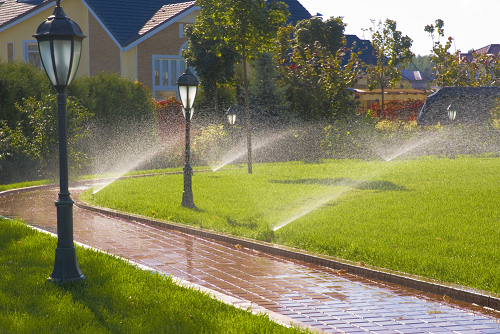
Components of a Sprinkler System
- Sprinkler Heads
There are two main types of sprinkler heads- rotary sprinklers and spray nozzles. Rotary sprinklers rotate along an arc to distribute water while spray nozzles distribute water in a fan-shaped pre-determined pattern. Both sprinklers can be used in pop-up format and on risers.
- Controller
The controller is the part of your sprinkler system that you program to turn your sprinklers on and off at specific times.
- Valves
The valves control the amount of water moving being sprinkled depending on the type of irrigation zone. For instance, a valve will prevent water from being siphoned back to your house due to pressure changes and reduce water pressure where drip irrigation is required.
How to Create Your Sprinkler System Design
- Measure The Area of Your Compound
Pick up a pen, notebook, and tape measure. Proceed to measure the length and width of your compound and draw it to scale. Your map will determine the area for your sprinkler system. Remember to indicate all the features in your home, including the fence, house, walkways, sheds, and driveways.
- Figure Out Your Water Supply
Contact your local water authority to obtain a water pressure report and measure the water pressure in your house at different points. To do this, find a water gauge. Turn off all the water inside your home and connect your water gauge to the spigot outside your house. Then turn on the spigot to measure your output. You should also find out your gallons per minute (GPM) by measuring the time (in seconds) it takes to fill a gallon container from your outside spigot on full blast, and divide it by 60.
- Divide Your Property Into Hydrozones
Divide the total lawn into hydrozones to avoid overwatering or under watering the grass. The types of hydrozones will vary depending on the area and shape, sunlight and shade, types of plants, and the type of soil.
- Design Your Sprinkler and Pipe Layout
Create a drawing and ensure that all parts of your lawn receive adequate irrigation. Lastly, organize all your pipes, valves, and the controller box to determine how you will lay everything on the grass.
Conclusion
Having a sprinkler system will keep your lawn green all year round. If you have any questions on the perfect sprinkler system design, contact us today.
Spruce Up Your Outdoor Landscape with A Rock Garden
Designing your landscape creates an aesthetically appealing ambiance and a sense of satisfaction in your home. One practical way to achieve a satisfying design is by adding a rock garden to your yard. Rockeries, also known as alpine gardens, add texture, beauty, and color to a home, and require minimal attention. These type of gardens emphasizes a variety of rocks, stones, and boulders and incorporate small plants and shrubs to add a contrasting green effect.
Why Should You Choose a Rockery?

ckeries can withstand harsh weather as compared to greener gardens. Even without rain, your rocks will remain sturdy, unlike green plants that wither away. If you live in drier zones, rockeries are suitable because they contribute to water conservation, while still providing beauty to your home. A rockery will also cut down your maintenance time by eliminating tasks such as weeding, watering plants, and pruning flowers. Lastly, no matter how small your compound is, a rockery will fit and add to the diversity of your landscape without overcrowding your yard.
How to Create Your Rock Garden
The concept of rockeries is to recreate the features naturally existing in your yard. If your landscape is naturally rocky, then you can use the rocks in your compound. If not, should invest in sound design and materials to achieve drainage and aesthetics.
- Sketch Out Your Plan
Map out the idea of your garden using a pencil and paper. Sketching your alpine garden will save you time once you start laying the rocks and plants. It will also ensure you acquire all materials before creating the garden.
- Take Out the Weeds
Rockeries are appealing when all stones and vegetation exist harmoniously. When weeds crop up between boulders, your garden becomes unruly, which is why you should start by weeding your yard. Ensure that you pull out all unwanted vegetation by the roots or apply herbicide a few weeks before laying your garden.
- Drainage
Once you have cleared out the vegetation, dig out at least 60cm of soil in well-drained areas, or one meter if you live in a clay region. Backfill with well-drained material such as rubble, hardcore, stone chippings, and coarse sand. After backfilling, add bone meal, manure or compost to the landscape to promote plant growth.
- Choose Your Rocks
Your choice of rocks is entirely dependent on your design. Smooth stones are suitable for gardens with water features and ponds. Alternatively, you can use large boulders as a focal point by laying small rocks around them. You can also use colored stones to create mosaics and create contrast in your garden. If you have a sloping landscape, consider creating a terraced landscape featuring plants in between the terraces and a rocky path down the hill.
- Choose Your Plants
Alpine gardens work best with small plants and bushes that can survive in shallow soils. Go for alpine-origin vegetation and drought-resistant plants. Daffodils, tulips, brodiaea are tiny and add color to the garden. If you are recreating a Japanese Zen garden, focus on pruned bushes and moss. However, if you live in an arid region, opt for succulent plants spaced evenly between the rocks.
- Incorporate Pottery or a Water Feature
Pottery is an effective way to add color to your garden while still creating space for plants. If your landscape is extremely rocky, pots are a cost-effective method of adding vegetation to the yard. You can add a pond or a small waterfall to spice up the garden. The sound of water cascading down your rock formation adds a sense of serenity.
Conclusion
Rockeries are a great way to improve your yard and bring a peaceful meditative ambiance to your home. With the right help, you can create the perfect rockery for your home. If you are looking for professional help with your rock garden, contact us today.


