

Posts Tagged DK Landscaping
What’s Growing On?
Flowers always make people better, happier, and more helpful; they are sunshine, food and medicine for the soul. ~ Luther Burbank
Around this time of year I start to get spring fever, that urge to go outside and dig around and plant something. Even if you naturally don’t have a green thumb, flower gardening allows you to use your artistic playful side, being outside in nature soothes your soul, and a beautiful flower garden increases the curb appeal of your home. One of the first things a flower gardener learns is that there is not one date when it is best to plant all flowers.
This group of exotic and tropical summer bloomers can be planted right now and all through April in most of the country; planting times for colder regions of the North are typically from April to June, depending on the bulb.

Cannas are a personal favorite for their showy, tropical-like flowers and vibrantly-colored or variegated banana-like leaves. Dahlias offer numerous flower types from dazzling daisies, to showy pom poms, to show-stopping colorful blooms. Other note-worthy spring-planted bulbs include gladiolus, windflower (Anemone coronaria), pineapple lily (Eucomis), freesia, summer hyacinth (Galtonia), begonia, red hot poker (Kniphofia), Asiatic and Oriental lilies (Lilium), and Aztec lily (Sprekelia). 
So start by finding an empty spot in your yard that you see frequently that could use some color. If you don’t have an open bed, remove a patch of lawn in front of shrubs. Measure the size and note what time of day and how long the sun shines on that spot. Consider the following when designing your garden: hardiness, color, fragrance, height, time of bloom and size of plant. Do you want to attract hummingbirds, butterflies, or song birds? Or are you trying to create a work of beauty just for you? Next, visit your favorite full service nursery. They will help you pick out the right flowers for that spot. And be sure to ask about fertilizer, weed preventer and mulch.
Here are three easy ways to start planting your summer bulbs:
- Start with bulbs that are plump, firm and feel heavy for their size. Prep the soil by working a complete fertilizer into the entire bed or bottom of planting holes.
- Arrange the bulbs in groups or random clusters, then plant them at the depth recommended on the package with the pointed side or sprouting side facing up.
- Cover the bulbs with soil mixed with compost and keep the soil moist to slightly moist from planting until the foliage of the mature plant dies back.
One of the biggest things about gardening is the upkeep, depending on the plants and flowers you choose this can require little maintenance or high maintenance. Be realistic about your daily scheduled and how much effort you are willing to put in weekly to maintain your gardens.
Work all day? Busy with kids? Then opt for low maintenance plants that need very little maintenance or call DK Landscaping to keep your yard looking beautiful all year long! (707) 280-3632.
Springing Forward

Spring is an exciting and one of the most beautiful times of the year. The days are becoming longer, the weather is getting warmer, you awake to birds chirping in the morning, and spring blooms and lush green plants come alive in your landscape.
After a long winter, your lawn and gardens may be looking a big ragged and dreary. So before you pull out your lawn furniture from storage, get in the “spring spirit” by getting your yard looking spectacular. Help your lawn, trees and shrubs get off to a healthy growing season with these six luscious landscaping tips:
1. ASSESS YOUR TOOLS: Check, maintain, sharpen and repair your landscaping tools for a smooth spring and summer experience. This includes your lawnmower, weeding/pruning tools, rake and edger.
2. CLEAN UP: Clean out dead leaves, branches, trash or anything else that could impair your garden and lawn’s growth. Prune
3. WEED CONTROL: Uproot any existing weeds you find out of flower beds and check your lawn for any weed growth, whether they’re leftover stalks from last year or brand-new shoots. Once weeds are clear, DK Landscaping recommends spending between 10-15 minutes a few times per week to prevent new weed growth in your garden.
4. FERTILIZE: Make sure your early spring fertilizer has less nitrogen and more phosphorus to promote strong roots. Be sure to keep fertilizer on target to prevent run-off, and sweep fertilizer granules that may reach pavement back onto your lawn. Give your lawn a slow, steady watering about once a week, but adjust depending upon rainfall, grass and soil type in your area.
5. MULCH: A fresh layer of mulch can take any flower bed from drab and dreary to beautiful. DK Landscaping suggests applying four inches of mulch over the top soil, which will help retain moisture and prevent growth of those pesky weeds.
6. IRRIGATION: Check your in-ground sprinkler system and make sure all your sprinklers are working properly. Remove any overgrown grass that may have covered up any part of the pop-up heads. Check the sprinkler heads for cracking and breakage from last year and have them replaced if needed.
It’s the perfect time in Northern California to gather up tools, slide into your boots, pull on your garden gloves, and enjoy that first breath of spring.
DK Landscaping specializes in landscape maintenance, irrigation, clean-up and colorscape in Sonoma County. Contact Kathy or David Lee for more information and a consultation on your landscaping (707) 280-3632.
How to Create a Landscaping Design Plan

Another mild winter has come and gone. So when the sun starts shining and the weather begins to get warmer, it’s the perfect time to begin thinking about some spring landscaping projects. This gives you the opportunity to list all the current features you enjoy about your current landscaping, and any that you would like to improve upon. It could be as simple as enhancing a focal point, such as a pool area with a stone patio or water feature or it could be having the landscape that you always dreamed of having.
Even if you have a naturally green thumb, DK Landscaping suggests hiring a landscape designer. They are trained professionals that can save you from wasting money on wrongheaded ideas and open your eyes to possibilities you haven’t considered. Landscape designers can take all of your big picture ideas and create a realistic plan that works with your budget and time. It can also help you make decisions on prioritizing your needs with the landscape project.
- How long do you intend to live in your home? This helps with budgeting and prioritizing phases of the landscape project.
- How do you see yourself using your yard? hosting Sunday barbeques, working on a crossword puzzle in your hammock, swimming laps, growing vegetables, roasting marshmallows by fire pit, waterfalls/ponds, putting green? The ideas are endless.
- What is your Landscape Design Style (formal, informal, contemporary, Asian flare, Tuscan, Mediterranean, eclectic, tropical)? It’s important that you select a landscape design style that best matches the look and feel of your home and still reflects your unique personality.
With a bit of proper planning with our design consultant, Kathy Lee, you and your family will be able to enjoy a resort style space for years to come. To get started on your project contact your friends at DK Landscaping (707) 280-3632.
Make a Date With Your Roses
Have you pruned your Hybrid Tea Roses lately? Pruning your roses back by 80% while they are dormant is the optimal time. Not only will it produce tidier plants, but will stimulate new, stronger, better-flowering growth and eliminate the nasty old stuff that harbors pests and diseases.
DK Landscaping provides you a step-by-step guide to getting the best blooms out of these traditionally beloved plants:
1. Wait until your roses are dormant. If the climate where you live is moderate, roses may never go into full dormancy or lose their leaves completely.

Hybrid Tea Roses
3. Remove all deadwood by cutting out all unhealthy canes. This means dead, diseased or damaged growth. Roses are sensitive to winter frost and the rest of the year are attacked by dozens of fungi, insects, molds, and bacteria.

Remove Deadwood
3. Prune to ensure that the center of the bush is open for maximum air circulation. That is, cut out stems that fill up and cross through the center. Remove any branches that are less than the thickness of a pencil, and remove any branches that cross or rub together. Train the rose to grow outwards.

Create Air Space to Prevent Disease
4. Make all cuts above a leaf bud that points towards the outside of the plant. Make all cuts clean – not jagged cuts, as this will allow insects and disease into the plant and open it up to infection. Always prune to a healthy bud. Make sure your cut is at a 45 degree angle going away from the bud.

Cut to a Leaf Bud
5. To ensure your plants remain healthy, we recommend painting all cuts with a sealing compound because the plant is not actively growing and can’t defend itself as well against diseases and pests.

Sealing Compound
6. Your Hybrid Tea Roses should look like this after it has been pruned (v shaped).

Hybrid Tea Rose Before and After Picture
For the best results, DK Landscaping recommends pruning your roses before Valentine’s Day! So put on a long-sleeved shirt and gloves and grab some sharp pruning shears and make a date with your rose or give DK Landscaping a call at (707) 280-3632 to get your hybrid tea roses bearing the champion flowers that it was meant to be by spring!
Rainscaping Your Landscape
With the rainy season still in store for us in Northern California, it is vital that your landscaping have proper water drainage built in to the design. Without proper drainage, your home and landscape can suffer greatly. Not only can it destroy your plants, yard and your neighbors’ properties, but can lead to serious structural problems for your home and hardscapes, such as cracked housing foundations, water leaks, and flooded sump pumps.

To avoid the nightmare of rather expensive structural problems and flooding, DK Landscaping provides some solutions to poor drainage:
- Proper Grading: Grading (if surface drainage is possible) is often the most inexpensive and most effective solution to correcting an area with poor drainage.
- French Drains: A French drain is basically a ditch lined with rocks or gravel that helps drain water away from an area. French drain works on the principle of gravity, being slightly sloped down from the area to be drained to the area where one wishes to redirect the water. Excess ground and surface water percolates into the French drain and is directed away.
- Catch Basins: Catch basins are simply a reservoir designed to trap debris so that it cannot enter the drainage pipes. Anytime your source of water is above ground, a catch basin can collect the water so that it can be piped away underground. Basins are used primarily when grading is either not possible or when it would create an undesired/unusable space.
- Sump Pumps: Commonly used back East where most homes have basements. Sump pumps are sometimes the only way to remove unwanted water from a location. Many homes have situations where there is no way to drain storm water from their property. If you don’t have a slope away from your property or there is a lower area or sunken area, a sump may be the solution to get the water out.
The primary goal of proper drainage is to remove the water and put it where it belongs: on the street! So whether you are doing it yourself or hiring a professional landscape company, you want to make sure the proper installation methods are being used. If you don’t know what the above bullet points mean, you probably want to hire professionals… this will not only save you a headache, but money in the long run!
For more information and a free consultation on your drainage system, please contact Kathy Lee at DK Landscaping. Kathy is our QWEL (Qualified Water Efficient Landscaper) Certified Irrigation Expert. We are also a certified WaterSense Partner. QWEL and WaterSense are certified by the EPA.
Protecting Your Landscape From Frost Bite
The temperatures in Northern California are beginning to drop which means winter will be before us, before we know it. Night time temperatures that get down to freezing and below will damage some trees and plants if you don’t take precautions against frost. These low temperatures can begin late November and continue through February and beyond.
DK Landscaping helps you prepare your landscape and provides tips to protect your delicate plants from frost bite.

WINTERIZE
Fall is prime time to clean up your landscaping and remove the dead landscaping before it gets too cold. Removing dead plants can also stop the growth and spread of fungi that could infect your plants’ new growth in the spring.
PLANT
Planting trees and shrubs in the fall is a an optimal time before the first frost arrives and best time to take advantage on some great end of the season deals. Planting in the fall gives roots plenty of time to become established before the next growing season begins. Not only will you get to enjoy the changing leaves for a brief time, you will also put less stress on your young trees because of the cooler weather and rain conditions fall offers.
MULCH
Mulching can be a great first step in preparing for winter’s frost. If you are unfamiliar with mulching, check out our previous blog post called Mulch About Fall. There are many benefits to mulching your lawn and plants, especially before winter. Mulching in the fall can help protect your plant’s roots as well as help them retain moisture during the cold, dry winter.
Just a few preparations for winter can guarantee that your landscaping will come back fresher than ever in the spring.
For more information on the care of your landscape, please contact David or Kathy Lee from DK Landscaping (707) 280-3632.
Mulch About Fall

Did you know that mulching in the fall is just as important as it is in the spring and summer months? We mulch in the spring and summer months to suppress weeds, retain moisture and feed and warm the soil. However, when the temperatures begin to drop and the ground freezes, root systems can be exposed. The primary reason for winter mulching is to protect our plants from the harsh conditions of winter freezes, thaws and winds. Mulch acts as an insulator to balance the temperature creating a warm, heavy blanket of protection.
Neglecting to mulch in the fall can be damaging to your plants in the spring season. And the cost of mulching is nothing compared to the cost of replacing some of your favorite trees and shrubs. It also adds a beautiful aesthetic to your landscape in the winter months.
Using fall leaves as organic mulch is a great benefit to your landscape. They will break down over the course of the wintertime and create a layer of nutrients for your plants to draw from. Adding a layer of leaves over your perennials will help regulate soil temperature of the wintertime, as well as give new shoots a protective blanket as they enter the world in the spring.
DK Landscaping offers mulching installation in Sonoma County. Contact us for more information on the benefits of fall mulching (707) 280-3632.
The Flare of Fall
Fall is officially here. For some, it means crisp clean air that gives us a break from the summer heat. For others, the first thing that comes to mind is bare trees and dull and colorless landscape. DK Landscaping shows you that fall doesn’t need to mark the end of beautiful landscaping and that it’s actually the optimal time to highlight colors in your landscape.
If you’re looking to put a little spice in your fall, consider these trees and shrubs (as well as the one’s pictured):
SUGAR MAPLE TREES: A great, extra-reliable tree that makes an impressive statement in fall. Sugar maple are known for their distinctive flower and bark characteristics and offers gorgeous red, burnt-orange, or yellow end-of-the-season leaves.
SOURWOOD TREES: Has summer blooms that look like lily-of-the-valley flowers. The drooping panicles hang on the tree until it turns color in late autumn, giving the effect of white flowers set against brilliant red foliage.
MUMS: Gives your garden a splash of cheerful color well into the cooler months at a time when the rest of your flowers are winding down.

DOUBLEFILE VIBURNUM
This beautifully tiered branching gives a layered look with reddish/purplish leaves
Finally, there are a number of accessories, centered around the season that can further enhance your fall look without the long term commitment. Adding bales of hay and cornstalks to the landscaping — these can often be picked up at local farms or even craft stores. Pumpkins and gourds also make wonderful additions to the bright colors of the fall landscaping. These can be added to a porch or front entrance, or can even be placed on the ground among your other plants. Last, a fall wreath on the door adds the perfect touch to the fall landscaping outside of any home.

BURNING BUSH
Known for their brilliant red fall foliage. With dark green leaves through spring, in late summer the leaves turn a beautiful burgundy red.
With the proper preparation, any yard can easily be transformed for the season of fall. Any local nursery or home improvement store will have a large selection of items available to purchase so that the added touches of shrubs, fall flowers and trees can give your home an elegant and seasonal look with little effort.
For more information and tips on your landscaping needs, please contact DK Landscaping (707) 280-3632 or by email, davidmunlee@aol.com.
The Art of Irrigation
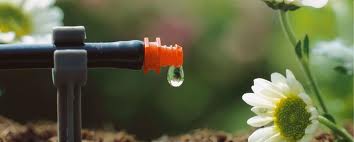
One of the challenges for a gardener is managing the proper use of water. The lack of water can be damaging, or deadly, to anything growing outside. DK Landscaping shares the art of irrigation and will help you prepare your garden for it.
Benefits of Drip Irrigation
By using drip irrigation, your garden will use less water, will require less maintenance, and help discourage less weeds and pests. You will be giving them the moisture they need, where they need it: at their root zone.
It will save you up to 90% compared to watering with a hose. It saves you time having your drip system on a timer. You control your irrigation timer and adjust it for seasonal changes (for instance, August heat in Northern California consumes the most water). Together with mulch creates an organic weed control without the use of harsh and unhealthy chemicals. Watering only the roots of your plants with drip irrigation also cuts down on water-borne pests and fungal diseases that spread by water movement.
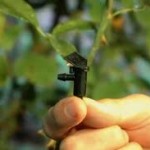
With a timer, you can control how much water your plants receive by setting up your drip system with different size emitters, which are the system’s delivery mechanism. You can use a small emitter, such as one that delivers 1/2 gallon of water per hour, at the base of small plants, such as herbs; for larger plants, such as trees, you can provide more than one emitter that delivers 3 gallons of water per hour, or more.
DK Landscaping also recommends that all valves feeding the drip system should have:
Large Filter: A small filter or no filter will result in debris clogging the system.
Pressure Reducer: Absence of it will result in emitters being blown off the main feed line. Drip systems are designed to work under low pressure (nominally between 25 PSI to 35 PSI) while normal pressure on the water main line is nominally 70 PSI.
Pressure Compensated Emitters: Pressure compensating drip emitters (PC Emitters) deliver a consistent output of water, even with increase changes in elevation or pressure due to long drip runs. PC Emitters are best used in landscapes and gardens that have drops in elevation that would cause an increase in pressure.
Emitter Hole Punch: Oval or wrongs size holes will result in leaks.
For more information and a free consultation on your irrigation system, please contact Kathy Lee at DK Landscaping. Kathy is our QWEL (Qualified Water Efficient Landscaper) Certified Irrigation Expert. We are also a certified WaterSense Partner. QWEL and WaterSense are certified by the EPA.


