

Archive for Lawn Care
Improve the Appeal with these Simple Lawn Treatment Tips
Every homeowner dreams of a perfect lawn. Unfortunately, only a few yards in residential areas are green, lush and healthy. This can be attributed to the lack of adequate care. In simple terms, if you do not put some time and effort into protecting, preserving and enriching your lawn, you will not get beautiful and thriving turf. Under ideal circumstances, you should engage a professional for yard maintenance. If you are set on DIY upkeep, use these simple lawn treatment tips for better results.
Check Your Mower Settings

If your grass is growing healthily but the effect after mowing is not stunning, it is advisable to consider the lawn mower settings. Setting the blades to cut the grass to short can be highly detrimental to the beauty of the yard. You should note that different species of grass have optimal cutting heights. Consult your landscaping expert on the best length for your grass. Otherwise, you will have to deal with bald patches, poor root systems and even drying plants. When mowing, ensure that the mower blades are sharp, and alternate the cutting patterns for long-term lawn appeal.
Water at the Right Time
Watering your grass is an essential practice for a healthy lawn. Unfortunately, irrigating the plants at the wrong time can cause unexpected harm. For instance, if you water the grass in the evening, the moisture will remain on the blades for a prolonged period. This can promote the growth of harmful fungi on your property. On the other hand, watering when the sun is blazing prevents optimal absorption due to evaporation. Therefore, you should irrigate during early mornings for maximum absorption without the moisture overload.
Rake the Fallen Leaves
Raking the lawn is not fun for most people. However, if you want to keep your yard and grass in the best condition, this practice is necessary. When dead leaves are left on the lawn for too long, they will suffocate the grass and prevent the penetration of sunlight. Consequently, the grass will no longer have the lush green look. In addition, leaves promote moisture retention, and this will increase the risk of fungi attack. So, plan for the timely removal of dead leaves to protect your lawn.
Deal with Bald Spots
Bald spots can develop on the lawn due to unexpected problems. For instance, if you have not upheld the best mowing practices, some areas of the yard will look a little bare. Also, poor soil aeration and smothering of grass by objects can cause bald patches. It is important to deal with these spots to restore the beauty of the lawn. The most convenient method for dealing with bald patches is filling in with a repair mixture. Typically, the repair material consists of suitable grass seeds, special fertilizer and in most cases, some organic mulch.
Finally, you should preserve the beauty of your lawn by controlling weeds. These unwanted plants will take away the nutrients intended for your plants. As a result, the grass will not grow healthier over time. Also, weeds are unappealing and will compromise the harmony of the turf. Therefore, you should plan for immediate weed removal if you notice any signs of invasion. Contact us for more information.
Outdoor Space Improvement: Simple Garden Ideas for Beginners
Establishing a garden on your property can be highly beneficial. In general, a home garden can be used for growing consumable produce or decorative plants. You can make your property more beautiful by planting flowers and other appealing plants in your garden. Alternatively, you can choose to plant vegetables, herbs and fruits. You will have access to fresh produce at a low price. It is possible to combine both categories of plants for a perfect garden.
If you are new to gardening, you might find starting the process challenging. Here are some basic garden ideas and simple guidelines for a smooth beginning.
Understand Your Environment

It is essential to learn more about your environment before starting the gardening work. If you are knowledgeable, you will increase the rate of success from the beginning. For the best results, choose a perfect spot on your property to start a garden. The spot should have adequate sun exposure. Too much or little sunlight will damage plants. It is also advisable to check the condition and properties of the potential gardening soil. Once you understand the specific characteristics of your garden, you can choose the most suitable plants to match the unique environment.
Consider Container Gardening
If you do not have enough space on your property, consider choosing container gardening. This one of the most beneficial and popular garden ideas in the modern home environment. You will be able to enjoy flowers or produce even with limited space. In addition, container gardening gives you more control. For instance, it is possible to grow any kind of plant because you can prepare unique soil material and move the container to different places for optimal environmental conditions. If you decide to take up container gardening, consider taking advantage of space on your patio, deck and rooftop.
Look into Vertical Planting
Most people opt for garden plants that remain close to the ground. If you are interested in a fresh idea for your home, think about growing some vertical plants. As implied, vertical planting involves establishing plants which grow upwards by climbing onto fences, stakes or trellises. This type of gardening can help you maximize your limited space. It also creates unique aesthetics in the home. In addition, this is the perfect gardening choice for people who might find squatting and bending difficult.
Choose Seeds or Starter Plants
Once you have decided on your ideal gardening style, you can begin choosing plants for your project. When selecting the perfect plants, it is advisable to keep your environment in mind. Some vegetables, herbs and flowers will not thrive in certain environments. Therefore, opt for plants which can grow with ease in your home. You will also need to choose whether to acquire starter plants or seeds. For a beginner, starter plants or seedlings are the most suitable. This choice will eliminate your worries about sprouting. On the other hand, seeds are cheaper, and you will find diverse plant species.
Utilize Companion Planting Methods
Consider utilizing a companion planting technique in your garden for better results. This approach is perfect if you would like to have a mixture of plants on your space. Companion gardening involves planting different complementary species of plants together so that they will benefit from one another. For instance, if you are planning on growing vegetables, you can plant carrots alongside leeks. The lees will repel harmful carrot flies. Note that there are some plants must not be planted together. If two species are affected by the same diseases and pests, avoid planting them together. Contact us for more information.
How and When to use Fertilizer in Your Lawn and Garden
Time for our annual reminder that fall is one of the best times to apply fertilizer to your lawn. Why? Because a proper application of fertilizer before the first frost will help it survive a harsh winter. Certain plants such as pansies, Iceland poppies, and calendula, usually need to be fertilized now, too, because most soil doesn’t provide the essential nutrients they need for optimum growth.
Guide to Healthy Lawns

Sonoma County is home to more than a dozen grass species. These cool-season grasses actively grow in the spring and fall. That’s why it’s important to fertilizer during those times of years. Experts recommend that at least one fertilizer treatment be a “complete” one that includes all three primary nutrients a healthy lawn needs: nitrogen, phosphorus, and potassium. Otherwise, most established lawns need only a nitrogen rich treatment on a regular basis.
Some signs that your lawn needs fertilization include:
- Discoloration
- Slow growth
- Weed or other pest invasion
The key to a health lawn is making sure just the right amount of fertilizer is applied over the course of a year. Too little and you have the problems listed above; too much and root growth slows down, leaving your lawn vulnerable to problems like insect infestation.
Fertilizer as Part of Regular Landscape Maintenance
A lush, green lawn depends on more than watering and mowing. It’s the result of regular, strategic maintenance throughout the year. DK Landscaping’s innovative lawn maintenance plan helps your yard stand out in the neighborhood.
From streetscapes and business complexes to condos and single-family homes, DK Landscaping delivers consistent, reliable landscape maintenance services to local properties. Any business or homeowner who wants to protect their investment should consider using a service like ours that gets a landscape on a regular maintenance schedule.
Helping our commercial and residential customers enhance their landscape is a vital part of what we do. We know the best time to fertilize, what spot treatments are needed, and when it’s the best time to uproot weeds, aerate, mow, and mulch. We want to help you get and keep a healthy and beautiful lawn!
As professional landscapers we also provide monthly irrigation inspections to help you manage your water use and save money while doing it. Other maintenance services include:
- pH test to check for proper nourishment
- Tree care including trimming, planting, moving, disease control, and removal
- Seasonal color plantings
- Garden bed care including pruning, weeding, fertilizing, and mulching
Learn More
Want to learn more about keeping your lawn in prime condition through the use of fertilizer? Contact us today. We look forward to discussing with you all the benefits of getting on a regular landscape maintenance schedule!
Landscape Maintenance: Simple Guidelines for Reducing Your Long-Term Costs
Beautiful and pristine landscapes enhance the general appeal of homes. In addition, landscape maintenance can increase the resale value of the property. Unfortunately, the cost of keeping your lawn, garden and other landscaping features in excellent condition can be high. As a result, it is not uncommon for homeowners to neglect this aspect of their real property. If you are struggling with keeping up with these expenses, you might be looking for a way to minimize costs without sacrificing your beautiful landscape. Here are simple maintenance tips to help you improve your landscape at lower costs.
Choose Low-Maintenance Plants

Your choice of plants will determine the level of maintenance required to keep your property in the best condition. In simple terms, some types of grasses, flowers, shrubs and trees need more intensive care to grow and thrive. If you have these high level upkeep plants, you will need to spend more water, fertilizer and labor on your landscape. Therefore, if you are planning on adding some fresh flowers or other plants to your landscape, opt for hardy plants. For instance, drought-resistant and indigenous plants will grow naturally without special care or high costs.
Remove Invasive Weeds
It is important to keep an eye on the weeds growing on your landscape. In general, invasive weeds are quite harmful to your decorative flora and the lawn. The unwanted plants tend to compete for nutrients and often cause the malnourishment of your valuable landscaping plants. Therefore, you should check your lawn periodically for weeds and remove them. This task is relatively easy and does not require special equipment. You can manually uproot the invasive species or use hoes or weeders. If your lawn is heavily affected, herbicides are also an option.
Consider the Composting Option
Landscaping plants need additional nutrients to thrive because the natural soil has limited nutrients. In general, homeowners purchase fertilizer and other enriching solutions from local stores and landscaping companies. Commercial products are convenient because they are readymade, easy to apply and well-balanced. However, this is not your only option. It is possible to create your own nutritional material by composting your green waste. This solution is viable if you have plenty of green waste and time to handle the composting process. The compost will enrich and improve the composition of the soil, and you will save on landscape maintenance costs.
Establish a Suitable Watering Routine
Residential lawns and gardens require regular watering for ideal growth. Unfortunately, numerous people spend more money than necessary on irrigation. This issue can be attributed to irresponsible watering practices. It is important to have a good plan to minimize water wastage. Where possible, it is advisable to place programmable sprinklers on your property. These devices will release water at predetermined intervals. Also, you should plan for watering in the mornings so that the water will not be wasted through evaporation.
Professional Landscape Maintenance
Landscape maintenance can be a time-consuming process. In addition, if you are not familiar with the work, you might not get the best results. Therefore, if you have insufficient time or have never dealt with the upkeep tasks in the past, consider professional landscape maintenance. The investment is worthwhile because you will avoid damaging your land. Also, it is cheaper to have an expert handle the work than causing damage and planning for restoration.
If you would like to learn more about professional landscape maintenance and possible money-saving tips, consult our experienced landscaping experts for information.
Backyard Ideas: 5 Easy Tips for Creating a Beautiful Drought-Resistant Back Yard
Earlier this year California made permanent the water restrictions that had been in place throughout the drought. While many people re-landscaped their front yards during the dry years, many more let their back yard lawns wither away, or removed them completely. But efficient, non-wasteful irrigation doesn’t mean you can’t enjoy a beautiful back yard retreat.
Xeriscaping, or water-wise, climate appropriate gardening, can allow you to have all the color, blooms, and lushness you desire while significantly reducing water use and maintenance. Try one or more of these 5 backyard ideas that are ideal for the dry summers and wet winter Mediterranean climate of Sonoma County.
Low-maintenance backyard ideas

Landscaping your back yard with waterwise techniques is not only environmentally friendly, it can be downright gorgeous. Here’s how.
Native plants
Always a good choice for xeriscape principles, climate-appropriate plantings are those that are suited to your local water availability. Here in Sonoma, good native choices include
- Perennials like lavender, rosemary, Santa Barbara daisy, Mexican sage, verbena, catmint, and dusty miller.
- Annuals and bulbs that are well-adapted to drought-tolerant gardens. Think daffodils, irises, California poppies, larkspur, and alyssum.
- Vines that include climbers like wisteria, honeysuckle, grape, and potato vine.
- Drought-tolerant grasses such as fountain, blue oat, blue fescue, sedge, and deer grass.
- Aloe, agave, echeverias, and sedums are good succulent choices that cover a wide spectrum of the green palette.
Groundcovers
Groundcovers are a great replacement for lawns, help to prevent soil erosion, and add a lovely splash of color. Is your Sonoma back yard mostly sunny? Rockrose is a hardy choice that requires almost no care. More shade than sun? Try creeping barberry. It’s bright yellow flowers in mid spring and blue berries in early summer make this a real show-stopper.
Don’t forget the mulch. It helps to moderate soil temperature, curtail evaporative water loss, and keep the weeds out of sight. The most common mulches are chipped or shredded bark, but gravel and stone can also be used.
Hardscape
There’s nothing more low-maintenance than hardscape. Paved areas, retaining walls, and stone and brick pathways create a clean minimalist look that can be enhanced and added to depending on what style back yard you prefer. Try a walkway of pea gravel with stepping stones that leads from the deck to the garden. A stone patio or composite deck are ideal for backyard barbecues.
Decorative stone
Use a mix of different gravels throughout the backyard landscape for more visual appeal. Decorative stone like river rock comes in many different sizes, shapes, and colors. Together with decomposed granite, it’s a great choice for surrounding a water feature or filling a raised or flat bed.
Create multiple outdoor living spaces
A nice balance of plantings and outdoor living areas lets you extend your home’s footprint while having less grassy areas to maintain. Even less expansive back yards can have several smaller areas that offer lots of options for entertaining. One area can feature the grill, another the bar setup, and another can hold seating and dining options.
Just keep in mind that regular maintenance isn’t eliminated by xeriscaping. Fertilizing, pruning, and occasional weeding are all still required. Irrigation systems should be tested and adjusted according to the season. And pest management is a core practice of xeriscape ideology.
Learn More
If you’d rather spend less time taking care of your back yard and more time relaxing in it, or just want some more terrific backyard ideas for your own home, contact us today. We’d love to show you all the ways a water-smart backyard can be a beautiful one, too.
Irrigation 101: The Importance of a Good Sprinkler System Design
A good sprinkler system is one that satisfies your home’s landscape watering requirements, letting it flourish beautifully while saving large amounts of water and money. The benefits of investing in professional sprinkler system design are numerous:
- You no longer need to worry about watering at the proper times.
- Plants, tree, and ground covers get the right amount of water.
- Over and underwatering is virtually eliminated.
- A healthier landscape improves your home’s value.
Every sprinkler system we design is done with the xeriscape principles of promoting water conservation and reducing the need for regular maintenance in mind.
Plot and plan the perfect sprinkler system design

There’s a lot that goes into designing a good sprinkler system. Flow, working pressure, pipe sizing, water velocity, and friction loss must all be taken into consideration. There’s also valves, timers, and irrigation heads to think about. Add it all up, and it’s easy to see why having a pro handle it is a great idea!
Here’s a brief rundown on how a typical sprinkler system design plan comes together.
Measure and design
The first step in any sprinkler system design is measuring the property then plotting where fixed elements like your home, the driveway, paths, fences, patios, and decks are located. Next, current and future lawns, shrubs, ground covers, trees, and other plantings are added to the drawing. The landscape is then divided into areas such as front yard, back yard, side yard, shrub areas, lawn areas, and so on.
System design capacity
It’s not as complicated as it sounds. To design an automatic sprinkler system, you need to know how much water is available to irrigate your landscape. Most systems are designed to use water supplied by the city or township, but some people draw their water from wells or lakes. Determining capacity involves measuring water pressure (PSI) and water volume (GPM) then using those figures to make sure the most efficient watering system is put in place.
Product selection
Sprinkler heads and valves are two of the most important components. There two broad types of sprinkler heads:
- Rotating stream spray sprinklers that operate by rotating streams of water back and forth or in circles over the landscape.
- Small area fixed spray sprinklers that spray a fan-shaped pattern of water over a fixed radius.
Many homeowners also include a drip system in their sprinkler systems and most designs include a combination of all three types. Which ones are placed in which locations depends on water pressure, space, and area shapes like curved pathways or raised beds.
We’re sometimes asked if one system is less expensive than the other. In our experience, it tends to work out the same. Rotor heads require less pipe and trenches, but the rotors themselves cost more. Spray heads may be less expensive, but they need more pipe, trenches, and valves.
Whichever design you select, the sprinklers are then divided and placed into zones that are irrigated at different times of the day, taking into consideration things like sun exposure, plant types, and watering needs.
Create the perfect xeriscape sprinkler system
A well-designed sprinkler system design is sure to improve the health, appearance, and value of your landscape. If you’d like to learn more about our sprinkler system design services, contact us online or give us a call at 707.280.3632. Our professional team sprinkler design team is ready to give you the cost-effective, efficient, and long-term landscaping irrigation solution you’ve always wanted.
Landscaping Guide: How to Create a Beautiful and Functional Garden Design
There is no perfect garden design for all properties. Therefore, if you are interested in improving your landscape by establishing a garden, you must create a custom design that matches your needs. We at DK Landscaping know that an ideal design should complement the unique aspects of your property. Each piece of land has idiosyncrasies which can be used in landscaping. In addition, you must think about your goals for your new garden. Here are some simple guidelines to help you get started.
Choose Your Plants Wisely
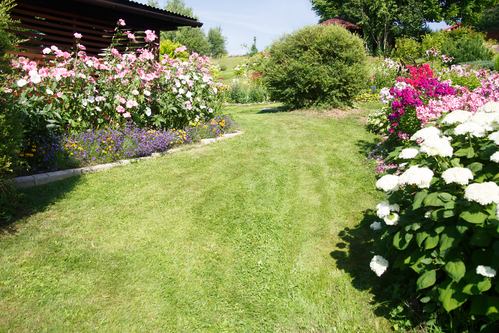
The best garden begins with the selection of the right plants to complement your landscape design and practical needs. In general, the first issue that you should consider when choosing your flora is the purpose of the garden. This space can be used to grow ornamental plants for aesthetic appeal. Alternatively, you can choose to grow edibles such as herbs and vegetables. If you are interested in both edibles and visual impact, it is possible to combine both types of plants.
The climate and environment is also an important consideration during the selection of plants for your garden. If you choose flowers, herbs or vegetables which cannot withstand growth in your local conditions, your garden will fail prematurely. It is advisable to choose indigenous plants because they grow naturally without the need for constant care. You can conduct research on the flora that grows in California for the best decisions.
Define the Boundaries
Boundaries are essential elements in garden design. If your garden does not have clear edges, your landscape will look like a wild land with plants growing haphazardly. Therefore, you must create distinct borders to define the perimeter of your garden and create order. If you would like to have a completely green landscape, consider using a hedge around your garden. For a more formal look, build a fence to isolate the space. It is also possible to edge the garden with stones. The stones will create a boundary without interfering with the visual effect of the garden.
Paths for Your Garden Design
Pathways are essential for a garden, especially one that experiences considerable foot traffic. The paths will allow smooth navigation around the space while protecting the landscape from the dangers of human carelessness. When designing your garden, you should think about the ideal places to form paths. You must also ensure that the path is wide enough for convenient use. To prevent the growth of plants on your pathways, consider installing a pavement or at least pouring gravel.
Borrow the Scenery
Gardens can be made more interesting by borrowing the scene from the surroundings. This borrowed scenery technique involves incorporating the view of a special feature into your garden. Simply speaking, this practice is about capturing the view beyond your own garden. For instance, you can trim the trees in your garden to reveal a distant building, your neighbor’s orchard or a mountain. Though these elements will not be on your property, they will have an impact on the aesthetics.
Enjoy Your Garden
Finally, you should create a comfort zone in your garden to allow you and your guests to enjoy the natural appeal of the space. For instance, a garden bench in a secluded spot might be perfect for settling and reading. A patio bordering the garden might be what you need for entertaining guests.
If you are interested in learning more about garden design, consult our landscaping experts for customized advice and guidance.

Lawn Treatment Tips
Proper maintenance of your lawn is crucial for a perfect residential landscape. If the right upkeep practices are not upheld, the lawn will deteriorate. Invasive weeds will grow on the land, the plants will lose their lushness and the grass might begin to wither. On the other hand, if you make time for lawn care, you will preserve the natural appeal of your yard. Here are simple lawn treatment tips to help you keep your residential landscape beautiful and healthy.
Aerate the Lawn Soil

Compacted soil does not support the efficient growth of grass. If the ground is too compact, the roots of the grass will not grow deep. Moreover, water, air and nutrients will not be mobile and readily available in the soil. Fortunately, you can relieve compaction and aerate the lawn soil by creating holes in the ground at intervals. There are specialized tools for aeration, but a simple garden fork will also be effective. You will only need to push the prongs into the ground at short intervals.
Apply Suitable Fertilizer
Feeding the lawn with fertilizer can improve the appearance and health of the grass. The treatment will provide the nutrients which might be absent from the soil. If your landscape is large, it is advisable to acquire specialized equipment for nutrients feeding. However, if the lawn is relatively small, you can manually apply the fertilizer to the grass. Ideally, the material should be used during the rainy season. Fertilizer will burn the grass if it stays on the blades. If it does not rain, you should irrigate the yard thoroughly to allow the nutrients to sink to the soil.
Plan on Over-seeding
Over-seeding is a beneficial practice for old and tired lawns. It is advisable to consider this process if your lawn is showing signs of thinning out, or there are bare patches on the land. In general, over-seeding involves covering the entire loan with a mixture of grass seeds and fertilizer. When these seeds grow, they will fill in the gaps between the thinning areas of the lawn, creating a lush and uniform landscape. If you decide to carry out this process, remember to keep the lawn moist to facilitate germination.
Mow the Lawn Correctly
Mowing is an important part of keeping your lawn in good condition. However, if you do not perform this maintenance process correctly, you could cause more harm to your landscape. Where possible, it is prudent to have your grass mowed by a skilled professional. If you must handle the work, you must remember to only cut about a third of the total grass length. Cutting more will compromise the growth of the grass. You must also avoid mowing wet grass because moisture causes clumping. Mowing the lawn in this condition increases the risk of patching.
Going Beyond Lawn Treatment Tips
Maintaining a beautiful landscape is not only as simple as upholding simple lawn treatment tips. The best upkeep and care practices require effort, time, skill and experience. Therefore, if you are interested in improving your residential lawn for long-term health and aesthetics, consider consulting our experts at DK Landscaping Inc. Whether you need mowing and edging or fertilization and weed management, you will receive the best services for a beautiful home.
Finally…Here are the Elements of Amazing Garden Design!
Garden design is about getting the most out of your outdoor space and creating an inviting backdrop for family, friends, and neighbors.
You obviously want to get to the point of enjoying your outdoor landscape as soon as possible, but a lot of work goes in to getting things just right.
Garden design revolves around having the right location, soil conditions, boundaries, and surfaces to work around. That said, the elements of garden design can’t be overstated.
The Elements and Location of Your Garden

There are two basic elements of great garden design – something known as hard elements (i.e., relatively immovable design details like paths, walls, lounge chairs, and decks) and the actual plants and flowers that adorn your garden.
Hard landscape elements can include beautiful additions to your outdoor landscape like a koi pond stocked with fish or a stone path that gradually opens up to a breathtaking garden rich with flowers and color.
These two basic elements of garden design – the hard elements and the actual plants you use – dynamically work together to bring out the best in your garden.
Creating a Powerful Effect
The kind of paving that you use leading up to your garden can have a dramatic effect on the overall impact of your garden. Grey stone with purple lilac, for instance, can create a captivating French country look that really inspires.
On the other hand, working with a professional landscaping company to curate a manicured lawn and lush garden around black paving can create a modern look that’s both classy and inviting.
A professional landscaper can cut through all of the guesswork and help you determine what the best garden design for your home would be.
The best garden design for you is determined by your design preferences, of course, but also strongly suggested by your climate zone and any microclimates in your area.
Your particular climate can affect whether you’re able to plant annuals or whether hardier perennials would be a better choice. Your climate also impacts things like seeding, blooming, aeration, irrigation, and the soil foundation that fundamentally make a great garden.
The Soil, Boundaries, and Surfaces of Garden Design
A lot of homeowners want to fast forward ahead to enjoying a garden lush with roses, lilacs, tulips, and dahlias…and those are all beautiful. The foundation for all of those, though, is your garden’s soil.
There’s a process that a professional landscaping company can help you with known as amendment, which is where nutrients are added to your subsoil and topsoil to ensure that it provides a foundation for healthy plant and flower growth.
A landscaping company can use the right soil structure – whether that’s loam, silt, or some amount of clay – for your garden’s flowers, acidity levels, and your particular climate.
Boundaries and Surfaces for Framing
Having the right boundaries (e.g., a line of hedges and nice, white fence) and surfaces directly bordering your garden (e.g., woodchips, straw, or pebbles) can open up the possibilities with your garden design.
Using structural plants to frame the sides of your garden is a staple of good garden design as well. Boxwood and bay laurel can be planted year round and are relatively easy to maintain.
Evergreen shrubs are another popular border. The most popular border for most gardens is your lawn.
Having your lawn maintained or shaped and maintained around your new garden (lawns can be square, circle, or oblong-shaped) gets everything off on the right foot.
Professional landscapers can walk you through your options when it comes to garden design and picking the best aesthetic and practical features for your new garden. Contact us for more information.
There’s More to Landscape Maintenance Than You Might Think
Landscape maintenance is all about keeping your yard and garden attractive, safe, and healthy. That means keeping the bugs, insects, and other pests away and making sure that everything is cut and trimmed to keep your home or business landscape looking wonderful.
Getting on a regular landscape maintenance schedule might even be a good idea since it means less time spent pruning and weeding and more time spent with your family.
Professional landscapers can also handle the hard stuff like topsoil enrichment and making sure your lawn is on the right irrigation schedule.
Landscape Maintenance: Where Art and Science Meet

Professional landscaping is as much an art as a science. There’s a real science to, for instance, getting the pH balance of your lawn just right for growing plants, shrubs and flowers.
(Most grass likes a pH of about 7, though some warm-season grasses like more acidic soil with a pH of around 5. Don’t worry: The pros can tell you what’s right for your lawn!).
Now, one of the more scientific aspects of lawn maintenance is lawn aeration where your soil is perforated to allow in more water and the kinds of nutrients that your soil needs to perform at its best.
These tiny holes that are made when you have your lawn aerated also help get more air into the soil and help you avoid soil compaction. (That’s something you don’t want at all since soil compaction can negatively affect nutrient absorption and root growth.)
There’s as much art to landscape maintenance, though, since landscapers have to balance the layout, lighting, walkway access, and fencing of your yard with choosing and maintaining just the right bushes and mulch for your particular landscape.
Choosing the right kind of mulch – whether that’s straw, chips, stone, or bark – is important for making your garden and overall landscape look fantastic.
Mulching can also help prevent your garden from being ensnared by a bunch of weeds and ensure that soil compaction doesn’t become an issue for your lawn and garden.
The right kind of mulch can frame your landscape beautifully, promote nutrient absorption, and limit water use since more moisture gets to the roots.
Who Can Benefit from Regular Landscape Maintenance?
Because landscape maintenance covers so much ground almost any homeowner or business can reap the benefits. Condos, gated communities, shopping centers, community centers, banks, universities. You name it.
Any business that has a landscape that they want to protect and any homeowner that wants to improve their curb appeal should seriously consider getting on a regular landscape schedule.
So, do you currently need to be experiencing lawn issues to hire a landscaper? Not necessarily, but landscape maintenance includes things like fertilizing and spot treatments to address those pesky bald spots on your lawn.
Uprooting weeds is another thing that most homeowners don’t exactly look forward to doing but that can have a big payoff when it comes to keeping your lawn healthy and beautiful.
When you get on a regular landscape maintenance schedule you can have weeding, aeration, mowing and mulching taken care of.
Knowing that you’re doing the most to improve the curb appeal of your home or the attractiveness of your business property lends a huge amount of confidence that’s sure to spill over.
A professional landscaping company will even provide monthly irrigation inspections to ensure your yard, garden, shrubs, and bushes are getting the nourishment they need. You can also have your lawn pH tested to take the guesswork out of it.
Contact us to discover all of the amazing benefits of getting on a regular landscape maintenance schedule.


